
Reviewed · CHICAGO MUSEUM TICKETS
Chicago: American Writers Museum Flexible Date Entry Ticket
The American Writers Museum turns reading and writing into something you can do, not just something you look at. Follow an interactive timeline, test your ideas with language games, and sit down at a vintage typewriter to make a poem or story of your own.
I like two things in particular: the exhibits connect writing to American culture and history, and the hands-on stations give children and adults a reason to slow down and take part. The Chicago gallery adds a local focus, with writers who drew inspiration from the city.
The main consideration is the museum’s compact size. There is plenty to read and explore, but you may want more room, especially if you try to take in every display. This is a self-guided visit, so you set the pace and decide what deserves your attention.
- Type a few lines on a vintage machine: The typewriter station makes writing feel physical, and gives you a welcome break from reading exhibit text.
- Follow five centuries of American writing: The Nation of Writers Gallery links authors and works to the society around them.
- Make language hands-on: Interactive timelines, videos, games, and the Word Waterfall keep the galleries active.
- Look for Chicago’s literary voice: A dedicated gallery focuses on poets, novelists, journalists, and other writers inspired by the city.
- Bring children without paying admission for them: Children 12 and under enter free, though you need to reserve a ticket for each child.
- Use the flexible entry window: Your ticket is valid on the date you choose or on any day in the following 14 days.
Start with a timeline, then follow your curiosity
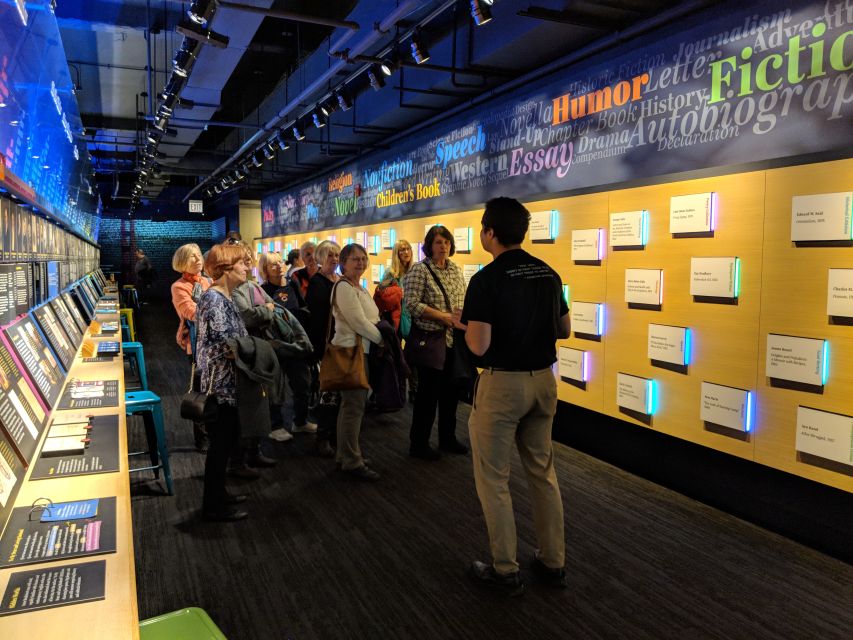
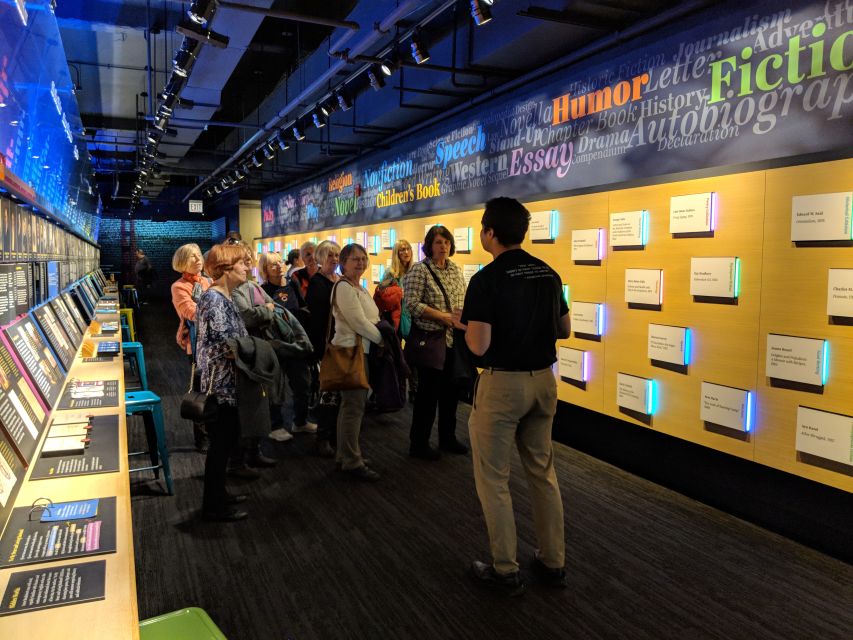
The museum introduces American writing across more than five centuries, and its scope is wider than a wall of famous novels. You will encounter poetry, lyrics, speeches, drama, fiction, nonfiction, and journalism. That variety matters: it shows how writing shapes public life as well as private reading.
The Nation of Writers Gallery is a good place to begin. Its interactive timeline gives you a framework for seeing authors alongside the changing country around them. Rather than treating literature as a row of isolated names, the exhibit helps connect writing to its era and its social context.
Expect to stop and read. The displays have a lot to offer, and the small footprint can make it tempting to hurry through. I would resist that impulse. Pick a few authors you know, then give yourself time to discover names and forms you might not have sought out on your own.
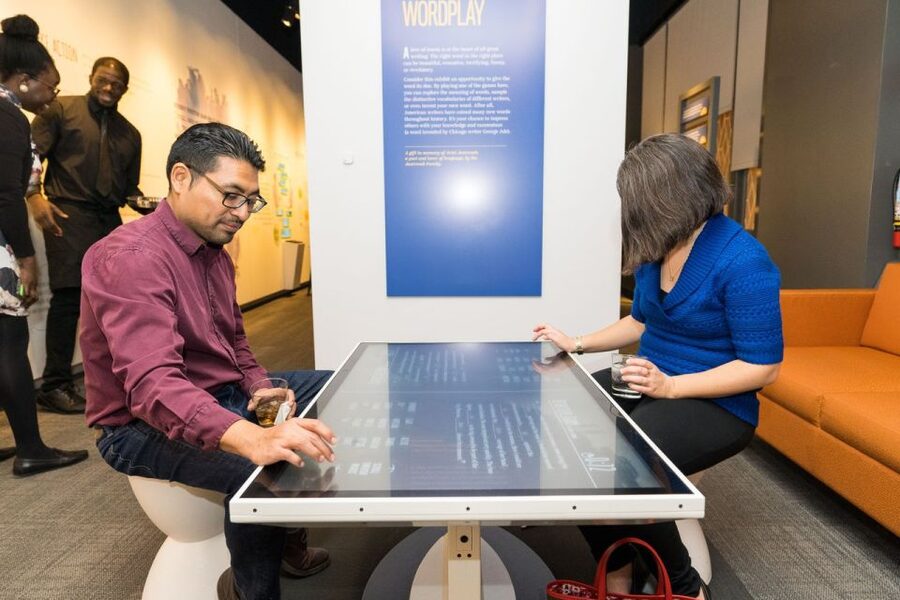
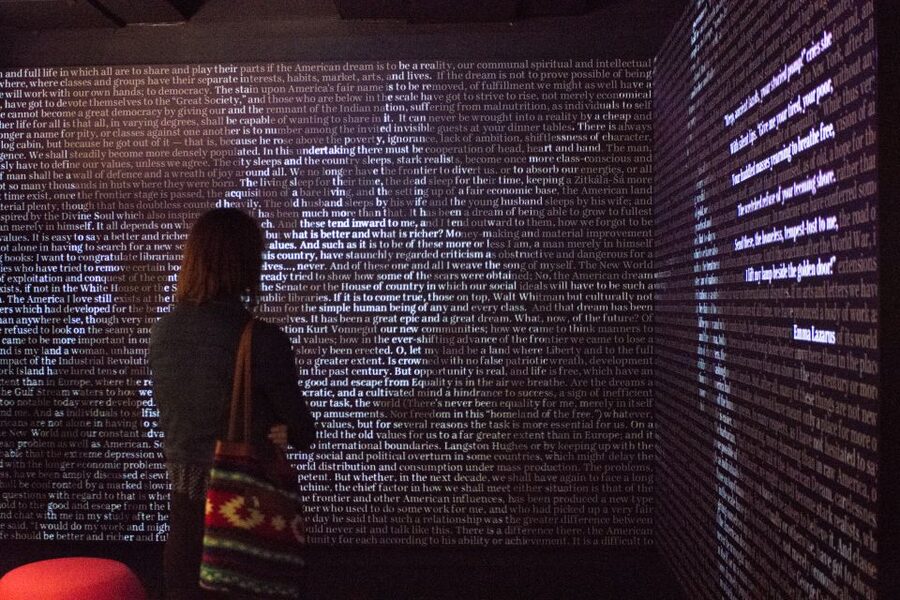
A surprise bookshelf adds a playful change of pace, while videos and dioramas give the material visual variety. The Word Waterfall is one of the museum’s more distinctive features, a reminder that the raw material of writing is language itself. It is a useful stop for children, but adults can enjoy the word play too.
See how language works in the Mind of a Writer Gallery
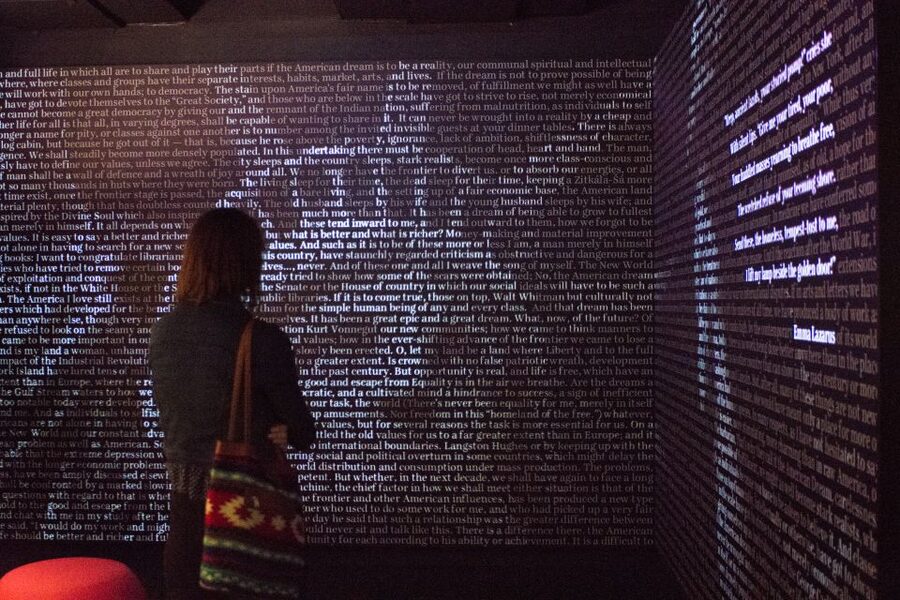
The Mind of a Writer Gallery shifts attention from what writers produced to how they work. Its themes include the habits and discipline needed to keep writing, as well as the close attention to language that can make a sentence sing.
This focus gives the museum a practical edge. You do not need to be a published author to recognize the challenge of sitting down, finding the right words, and carrying an idea through. The exhibits can make the writing process less mysterious, especially for young people who enjoy stories but have not yet tried making one.
Interactive activities help break up the reading. You can explore ideas through games and digital displays, and the galleries offer prompts that invite you to respond rather than simply move on. That mix is a strength for families: children can participate, while adults can take in the historical and literary details at their own pace.
There is still plenty to read, so this is not a museum where every visitor will be entertained by constant motion. If you prefer exhibits with little text, you may find the information-heavy sections slow. But you can choose your level of engagement, which makes the self-guided format useful.
More museum tickets around Chicago:
- Medieval Torture Museum Ticket with Audio Guide and Ghost Hunting
★ 5.0 · 962 reviews - Chicago: Art Institute of Chicago Fast-Pass Ticket
★ 4.8 · 819 reviews - Chicago: Field Museum of Natural History Ticket or VIP Tour
★ 4.7 · 717 reviews
Try the typewriters before you leave
The vintage typewriters are among the museum’s most appealing hands-on features. You can try writing a short story or poem, and the tactile clack of an old machine offers a sharp contrast to screens and touch panels.
This is more than a photo opportunity. Typing a few lines helps you feel how the tool shapes the act of writing, and it gives children a chance to experiment with a machine they may never have used. Several typewriters from different decades have been available, so the station can also prompt a conversation about how writing tools change over time.
There are other opportunities to leave something behind, including prompts and messages intended for future visitors. That small exchange gives the museum a social quality: your visit becomes part of a continuing conversation about words and ideas.
The typewriter area may draw a crowd if several people want a turn, and the museum does not promise a set amount of time for each visitor. Be patient and keep your writing short if others are waiting. A few lines are enough to get the feel of it.
Find the Chicago stories in the Chicago Gallery
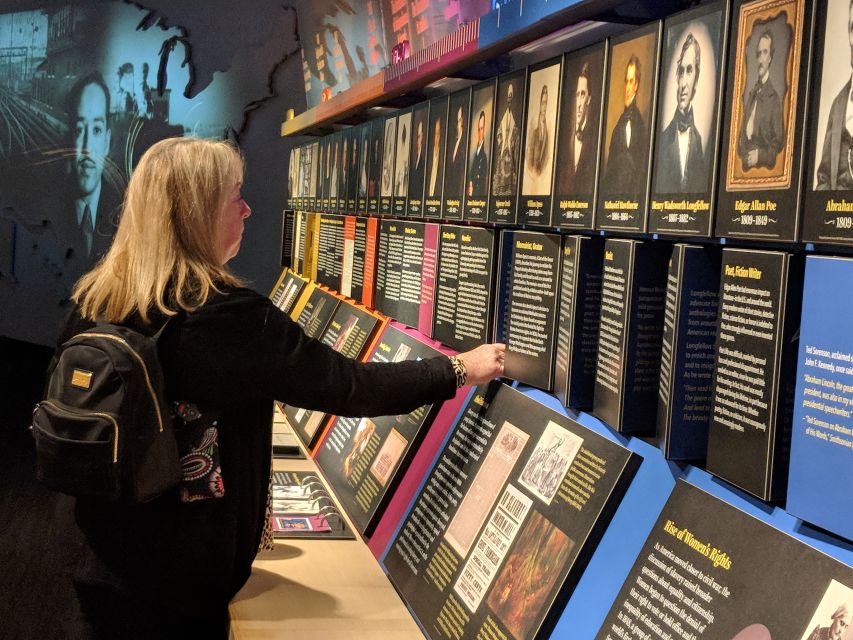
The Chicago Gallery puts the city in the foreground. It honors poets, novelists, journalists, and other writers who found inspiration in Chicago, giving you a local thread to follow after the broader story of American literature.
That focus is valuable even if you did not come to the museum looking for Chicago authors. It links place and writing, and it offers a different way to think about the city beyond its buildings and landmarks. You may leave with new names to look up, or a better sense of how a city can shape the work made there.
The museum also gives attention to writers across a wide range of backgrounds and forms. Featured figures include Emily Dickinson, Dr. Seuss, Edgar Allan Poe, and Prince, alongside writers and journalists whose work addresses American life in many ways. The breadth helps prevent the visit from feeling like a narrow canon of familiar authors.
Special exhibits add another reason to check what is on view before you go. Past subjects have included narrative writing in video games and Black writers’ work against racial injustice in the 19th and 20th centuries. These examples show how the museum can connect literature to subjects beyond books, but special exhibits change, so do not plan your visit around a particular past display without confirming it is currently open.
Give children room to read and make things
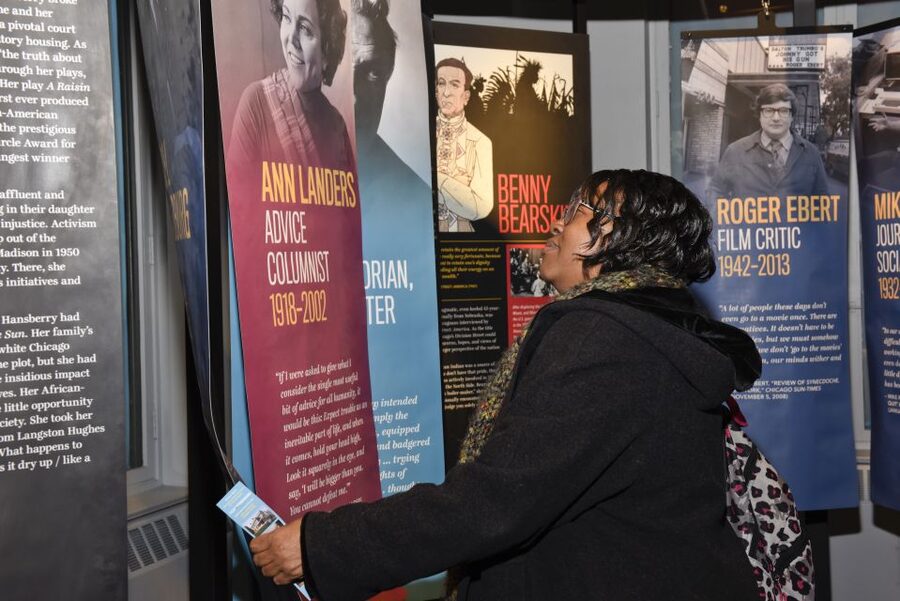
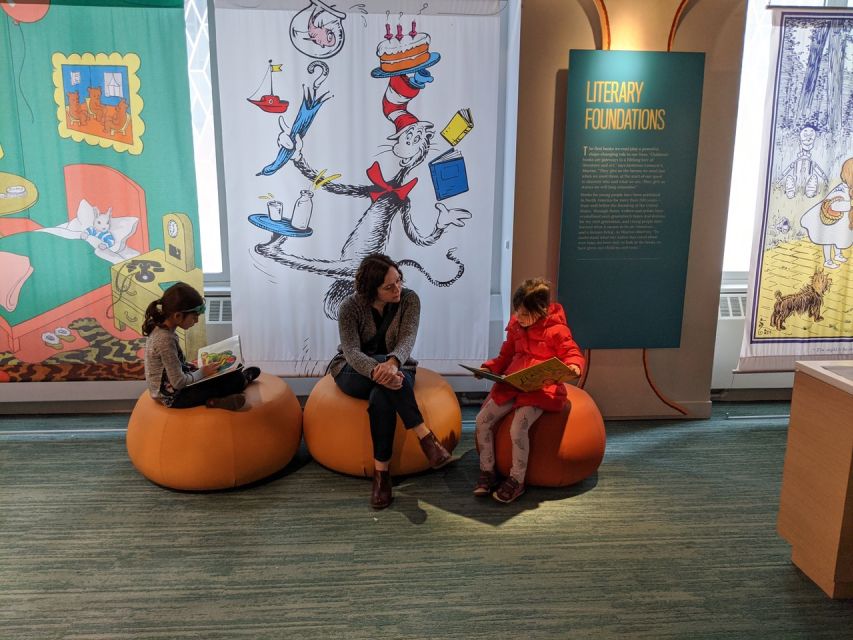
The Children’s Gallery is designed to give younger visitors a place to engage with stories and writing. It includes reading areas and an interactive reading space, so a family visit does not have to be an adult-led march from one display to the next.
The museum’s activities can work well for school-age children and teenagers. They can follow the timeline, play with language, explore writing prompts, and try the typewriters. The exhibits are not only for readers who already love books; the interactive approach gives curious children several ways into the subject.
Children under 13 receive free admission, but you must reserve a free ticket for each child. That makes the museum a good-value stop for families, particularly if your children will spend time with the activities rather than racing through the galleries.
One practical point: food and drinks are not allowed. Plan meals before or after your visit, especially if you are coming with children. The museum is a compact indoor stop, so it can fit into a part of your day rather than requiring a full-day commitment.
More tickets and passes around Chicago:
- Chicago: Willis Tower Skydeck and The Ledge Ticket
★ 4.6 · 4,350 reviews - Chicago: Architecture River Cruise Skip-the-Ticket Line
★ 4.8 · 4,325 reviews - Chicago: 360 CHICAGO Observation Deck Ticket
★ 4.5 · 3,173 reviews - Chicago: Navy Pier Centennial Wheel Ticket
★ 4.5 · 1,807 reviews
Plan a visit that fits your reading pace
Admission is $16 per person and includes all permanent and special exhibits. For an interactive museum with several kinds of writing on display, that is a reasonable price, especially if you spend time reading, using the activities, and trying the typewriters. You are paying for a self-guided visit, not a tour with a guide.
Some people can see the main displays in about an hour; a slower visit can stretch much longer. The difference comes down to how much you read and how long you spend at the hands-on stations. If you like to take in every label, allow more time than you would for a quick walk-through.
The ticket’s 14-day validity adds useful flexibility. You may enter on the date you choose or on any day up to 14 days afterward, which helps if weather or plans change. Check the museum’s available entry information when booking, since the ticket details refer to starting-time availability.
The museum is open Thursday through Monday, from 10 a.m. to 5 p.m. It is closed Tuesday and Wednesday, so check the calendar before building it into a busy Chicago day. Active teachers and students can book reduced admission with a valid academic ID, which must be presented on arrival.
The museum is on the second floor of a multi-use building. Enter through the building, pass the security desk, then take the elevator or stairs to the second floor and present your ticket at the museum front desk. The activity is wheelchair accessible.
You can cancel up to 24 hours in advance for a full refund, and a reserve-now, pay-later option is available. Those terms are handy if your plans are not settled, but be sure to check the exact conditions shown for your selected ticket.
Is the American Writers Museum worth your time?
I would put this museum on the list if you enjoy books, language, history, or the way culture changes through writing. It is also a strong choice for families with school-age children, thanks to the interactive displays, reading spaces, and free entry for children 12 and under.
The museum’s strongest feature is its combination of serious ideas and low-pressure activities. You can think about the role of writing in American society, then sit at a typewriter and make a few lines yourself. That balance helps the visit appeal to readers and to people who would not normally choose a literature museum.
The trade-off is scale. This is a compact museum, and the amount of text may feel dense if you prefer large galleries or exhibits that require little reading. I would plan for at least an hour, allow longer if you want to read closely, and treat the 14-day entry window as a useful backup rather than a reason to overpack your day.
At $16, it offers a worthwhile indoor stop with a clear sense of place and an unusual amount of participation for a writing-focused museum. Book it if you want a thoughtful, hands-on break in Chicago. Skip it if you have little interest in words or do not want to spend time reading.
FAQ
How much does admission cost?
The ticket costs $16 per person. Active teachers and students may book a reduced rate and must show a valid academic ID on arrival.
How long is the ticket valid?
You may enter on the date you choose or on any day within the next 14 days.
What are the museum’s opening hours?
The museum is open Thursday through Monday, from 10 a.m. to 5 p.m. It is closed Tuesday and Wednesday.
Do children need a ticket?
Children 12 and under enter free, but you must reserve a free ticket for each child.
Is the visit guided?
No. The ticket provides a self-guided visit, with entry to permanent and special exhibits.
What is included with admission?
Admission includes entry to all permanent exhibits and special exhibits, along with a self-guided visit.
Is the museum wheelchair accessible?
Yes, the activity is listed as wheelchair accessible. The museum is on the second floor, with access by elevator or stairs.
Can I bring food or drinks?
No. Food and drinks are not allowed.
Can I cancel my ticket?
Yes. You may cancel up to 24 hours in advance for a full refund.
Just added around Chicago
- Travel between Chicago O’Hare and Madison★ 4.5 · 4 reviews
- Verse Immersive Holographic Theater in Chicago★ 4.5 · 28 reviews
- Walking Tour: Historic Chicago Pubs in River North and the Loop★ 5.0 · 9 reviews
- Professional Photo Shoot in Chicago★ 4.5 · 8 reviews
- Private Transfer from Chicago Airport (ORD)★ 3.5 · 3 reviews
- The Devil in the White City: A Haunting History Tour★ 4.5 · 17 reviews
- 2 Hour Chicago Landmarks & Lakefront E-Bike Tour★ 5.0 · 4 reviews
- Chicago Scavenger Hunt Adventure★ 5.0 · 5 reviews
Chicago Museum Tickets, compared.
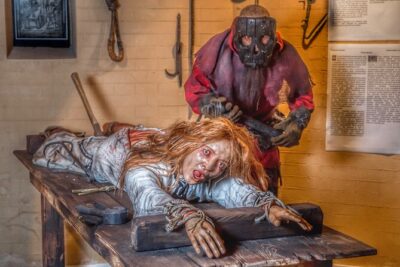
Medieval Torture Museum Ticket with Audio Guide and Ghost Hunting
Read our review →
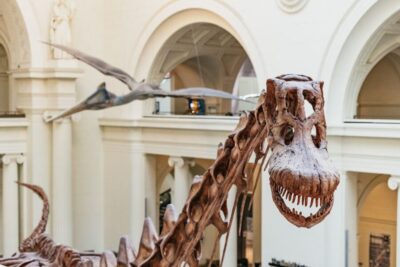
Field Museum of Natural History Ticket or VIP Tour
Read our review →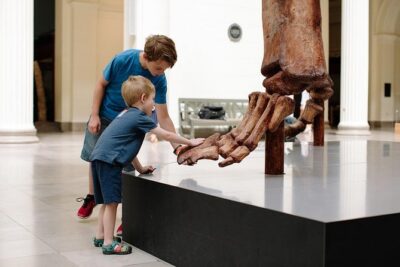
Field Museum of Natural History Admission Tickets
Read our review →
Skip-the-line: Art Institute of Chicago Guided Tour
Read our review →


2-Hour Chicago Lakefront & Museum Campus Segway Tour
Read our review →Browse the lists this tour appears in