
Reviewed · CHICAGO HERITAGE TOURS
Explore Black History on the Southside of Chicago
Bronzeville and nearby Kenwood tell a story of Black Chicago through places where history is not tucked behind museum glass. On this roughly 2.5-hour walk, you’ll visit sites connected to artists, civil rights leaders, President Barack Obama, and Muhammad Ali, with a fifth-generation South Sider as your guide.
I like two things in particular: the route pairs major names with neighborhood history, and it takes time to notice Kenwood’s early-20th-century homes instead of rushing past them. The tour also begins at the DuSable Black History Museum, giving you the option to visit the museum before or after.
One consideration: the tour does not include admission to the DuSable Museum, and the experience is outdoors and on foot. You’ll want comfortable shoes, a camera or phone, and enough mobility for a moderate walk.
Key points before you go
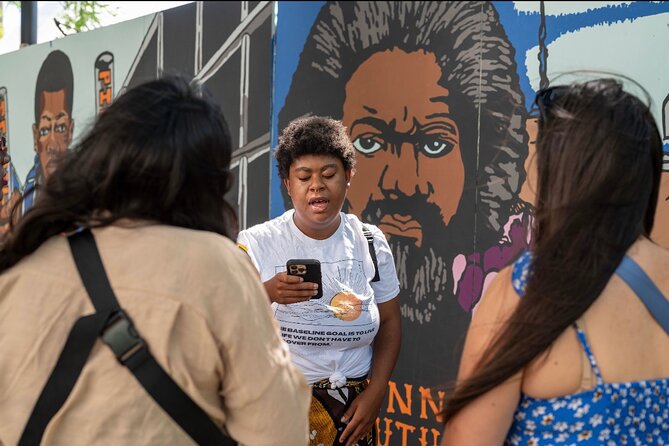
- The guide is a fifth-generation South Sider: Gillian brings a local connection to the places on the route and invites questions.
- Kenwood’s historic homes get a close look: You’ll stop near Obama’s Chicago home and see grand houses dating to the early 1900s.
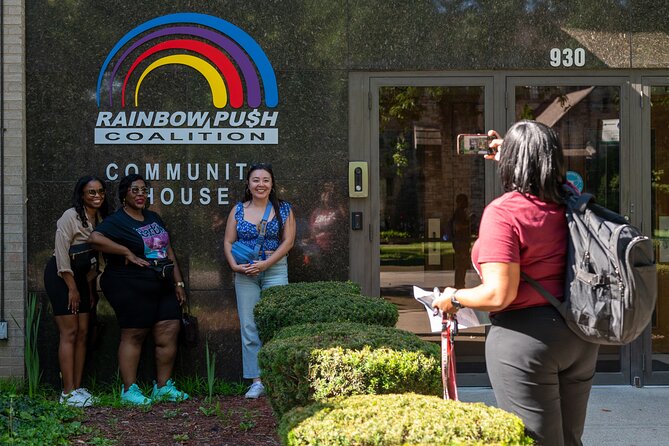
- The route links major figures to local institutions: Stops include the former home of Muhammad Ali and the headquarters of Operation PUSH, founded by Rev. Jesse Jackson.
- The DuSable Museum is the meeting point, not part of the tour: Plan separate time and admission if you want to go inside.
- The tour costs $5 per person and lasts about 2 to 3 hours: That is a low price for a guided neighborhood walk, though the value depends on how much you enjoy learning outdoors.
- Bring questions and a camera: The guide welcomes questions, and several stops are intended for photos.
A walk through Black Chicago, not just a list of famous names
This tour is built around the idea that Chicago’s Black history is best understood in place. Rather than spending the whole time inside a museum, you move through Washington Park, Bronzeville, and Kenwood, hearing about people and institutions that helped shape what became known as the Black Metropolis of America.
That mix matters. A visit to a famous person’s home can be interesting on its own, but the neighborhood context helps you connect individual stories to the wider city. You’ll see sites tied to political action, public life, architecture, and culture, while the guide adds local perspective along the way.
Gillian is described as a fifth-generation South Sider, and the tour encourages you to come with questions. That invitation is useful here: the route covers several different kinds of history, and what you want to know may depend on your interests. You might ask about the civil rights movement, the people behind a local mural, or the way the South Side changed over time.
The experience is billed as a walking tour of about 2.5 hours, with a stated range of 2 to 3 hours. The listed stop times add up to roughly two hours, leaving time for walking between locations and conversation. The pace and route make this more than a quick photo stop, but the schedule still leaves room for a separate museum visit or another activity afterward.
More heritage tours around Chicago:
- Chicago’s Chinatown Food and Walking Tour
★ 5.0 · 600 reviews - African American Heritage Tour of Chicago
★ 4.5 · 127 reviews - Chicago: Taste of Chinatown Food and Cultural Walking Tour
★ 4.9 · 97 reviews
Starting at the DuSable Black History Museum
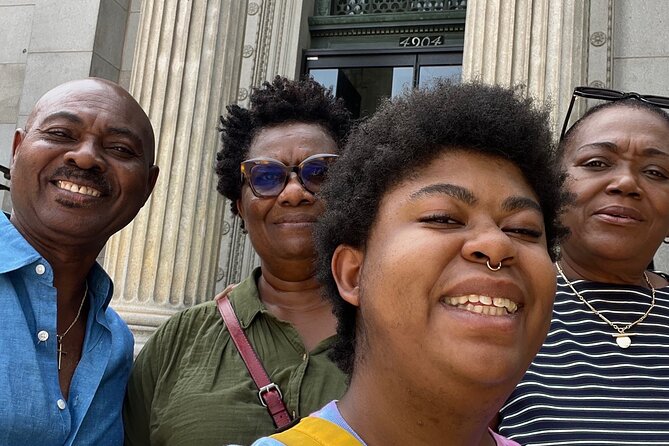
The group meets in front of the DuSable Black History Museum and Education Center at 740 E 56th Place. The museum is described as Chicago’s only African American museum and as the longest-running museum devoted to preserving and documenting Black history and culture. It is named for Jean Baptiste Point du Sable, identified as the first non-native person to settle in Chicago.
You’ll spend about 20 minutes at the starting point, but the tour does not include entry to the museum. That distinction is worth planning around. If you want to explore its exhibits, arrive early and allow separate time; admission is not included in the $5 tour price.
I like this setup because it gives you a clear historical starting point without making the walking tour dependent on indoor museum time. Still, if you are visiting from out of town and this is your main chance to learn about Black history in Chicago, I would consider pairing the walk with a museum visit. The tour and museum serve different purposes: one takes you through places in the city, the other offers a dedicated indoor collection.
Washington Park’s open-air history
From the museum, the route visits Washington Park, a large green space that sits in front of the museum. The stop lasts about 20 minutes and focuses on the park’s history, which reaches back to the 1800s, as well as its statues and sculptures.
A park stop changes the feel of the tour. You get a chance to pause, look around, and consider how public spaces hold layers of local history. The setting also offers a contrast to the residential streets and landmark buildings later in the walk.
There is no admission charge for this stop. As with the rest of the tour, the value comes from the guide’s interpretation rather than an entry ticket or an indoor exhibit. If you enjoy learning about the history of a place while standing in it, this should be a useful part of the route.
Kenwood’s historic houses and Obama’s Chicago home
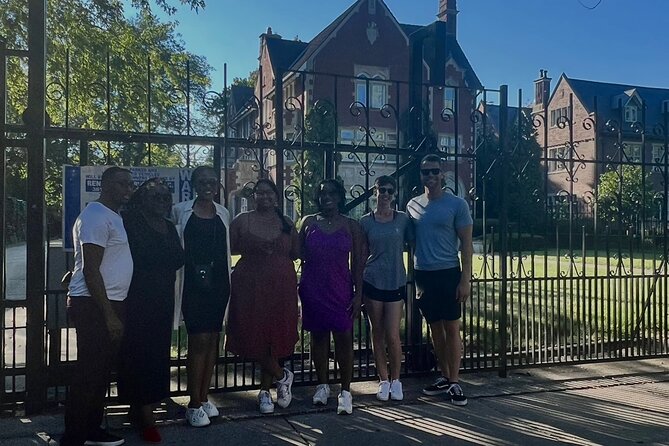
One of the main stops is in Kenwood, where you’ll visit the area around Barack Obama’s Chicago home. The planned stop lasts about 25 minutes, giving the group time to take photos and hear about Obama’s historic election as the nation’s first Black president.
The house is part of a neighborhood noted for its well-preserved brownstone and gray-stone mansions. One visitor described the architecture as dating to the early 1900s, and Kenwood’s grand old homes are a key reason this stop can appeal even if you are not focused only on presidential history. Look beyond the famous address and notice the scale and age of the surrounding buildings.
The tour’s description says you’ll stop by the home for photos. It does not promise access inside, so treat this as an exterior visit and a chance to hear the story, not a house tour. Because it is a private residence, be thoughtful with photography and follow the guide’s direction.
I would expect this to be one of the busiest-feeling moments of the walk, simply because a presidential home draws attention. The neighborhood setting helps broaden the stop: Kenwood is not just a backdrop for one public figure, but a place with distinctive architecture and a long local story.
More history tours around Chicago:
- Chicago in a Day: Food, History & Architecture Walking Tour
★ 5.0 · 1,153 reviews - Chicago: Field Museum of Natural History Ticket or VIP Tour
★ 4.7 · 717 reviews - Field Museum of Natural History Admission Tickets
★ 4.5 · 489 reviews - Chicago Walking Tour: Historic Treasures of Chicago
★ 5.0 · 362 reviews
Operation PUSH and the work of civil rights activism
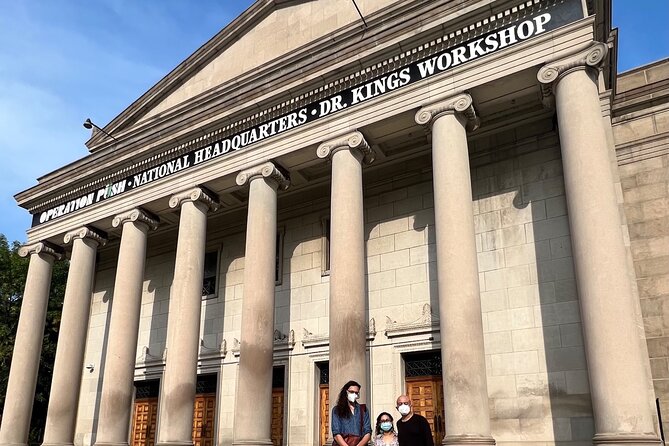
At 930 E 50th Street, the group stops at the national headquarters of Operation PUSH, founded by Rev. Jesse Jackson. The stop lasts about 20 minutes. The organization is described as an international human and civil rights group with a history of activism and advocacy extending from the 1960s to the present.
This is a different kind of landmark from a home or library. It connects the walk to organized political work and to the continuing legacy of the civil rights movement. The site is also associated with Dr. Martin Luther King Jr. through Jackson’s relationship to him; the tour describes it as Dr. King’s workshop.
For you, the value of this stop will depend on whether you want more than architectural sightseeing. It puts a local institution and a movement’s organizing work alongside the better-known biographies of Obama and Ali. You can ask Gillian questions about the organization’s history and the activism tied to the South Side.
Muhammad Ali’s former home
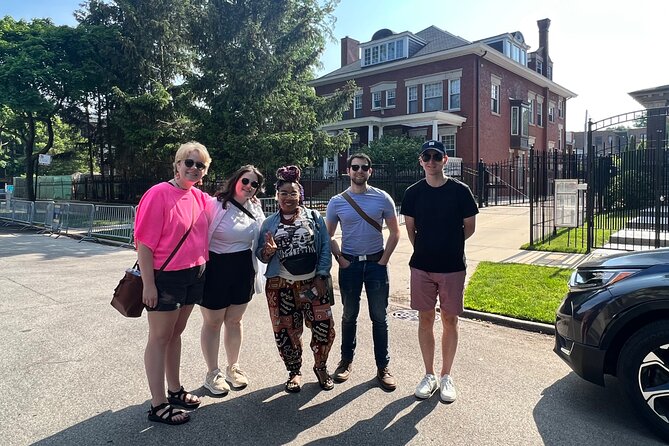
The tour then visits Muhammad Ali’s former home at 4944 S Woodlawn Avenue. Ali bought the mansion in Chicago to be closer to his spiritual mentor, Elijah Muhammad, after refusing military service on religious grounds. The planned stop is about 20 minutes.
This detail gives the house a clear place in Ali’s story. It connects his public stand on military service to his personal life and religious convictions, rather than treating the address as a celebrity photo opportunity alone. The building itself is described as a striking mansion, so there is also an architectural reason to stop and look.
As with the Obama home, plan on an exterior visit, not access to the interior. The tour information does not promise entry. Keep your camera ready, but remember that this is a former residence in a neighborhood, not a public museum.
Ending at the Blackstone library
The final listed stop is the Blackstone Branch of the Chicago Public Library, the city’s oldest public library. It is known for its Greco-Roman architecture, and the tour ends here after about 20 minutes.
This makes a fitting close to a route about public life and community institutions. A library may seem quieter than a civil rights headquarters or a former home, but its architecture and age make it a strong final point of interest. It also brings the walk back to the idea that history is held in everyday civic places, not only in monuments and museums.
The activity ends at a different location from its starting point, so plan for that when arranging the rest of your day. The meeting point is the DuSable Museum; the end point is Blackstone Branch. The supplied details do not specify the route between each stop or exactly how you should travel after the finish, so check your map before setting out.
Is $5 good value?
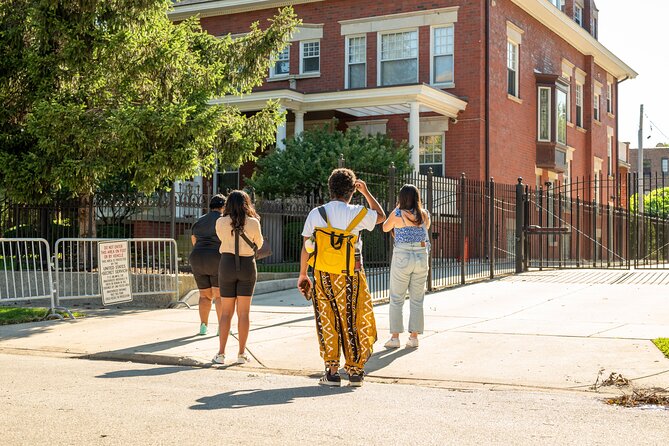
At $5 per person, the price is modest for a guided outing lasting roughly 2 to 3 hours. You are paying for a guide’s time and local perspective, not museum admission or a packaged indoor program. If you want someone to connect the sites and answer questions, that is a strong value.
The low price does not mean every traveler will find it equally worthwhile. If you prefer a short, highly structured museum visit, this outdoor route may feel too spread out. If you like neighborhood walks, local stories, and architecture, the mix of public spaces, historic homes, civil rights sites, and cultural landmarks offers a lot for the cost.
The listing highlights drinks, but it does not explain what is served, where, or whether drinks are included in the price. I would not count on a complimentary drink without confirming that detail with the provider.
The group can have up to 50 people, which is a sizable maximum for a walking tour. A larger group may make it harder to hear or ask questions, especially outdoors, so arrive ready to stay near the guide. The experience is also described as requiring a moderate level of physical fitness. It is a walking tour, and no specific route distance or accessibility details are provided.
The tour is near public transportation. Confirmation is provided within 48 hours of booking, subject to availability, and the activity averages about 13 days of advance booking. You can cancel for a full refund up to 24 hours before the start time; cancellations or changes made within 24 hours are not accepted. The tour may be canceled for poor weather or if its minimum group size is not met, in which case you are offered another date or a refund.
Who should book this South Side walk?
I would recommend this tour if you want a low-cost introduction to Black history in Chicago and prefer to learn outdoors, block by block. It suits visitors curious about civil rights, local leaders, architecture, and the people whose work shaped the South Side. The chance to ask a fifth-generation South Sider questions is a real plus if you enjoy conversation as part of a tour.
It is also a good choice if you have already planned to visit the DuSable Museum and want to add a neighborhood walk around that visit. Just remember that the museum is not included, and the tour ends at Blackstone Branch rather than where it starts.
I would look elsewhere if you need an indoor activity, want access inside the homes, or have difficulty with a moderate walk. For everyone else, the $5 price makes this an easy way to see more than the usual downtown sights and to connect major names with the South Side places around them.
FAQ
How long does the tour last?
The tour lasts about 2 to 3 hours, with an approximate duration of 2.5 hours.
Where does the tour start?
It starts in front of the DuSable Black History Museum and Education Center at 740 E 56th Place, Chicago.
Where does the tour end?
It ends at the Blackstone Branch of the Chicago Public Library, a different location from the starting point.
Is admission to the DuSable Museum included?
No. The tour does not go inside the museum, and museum admission is not included. You are encouraged to visit separately.
What are some of the tour’s main stops?
Stops include Washington Park, the area around Barack Obama’s Chicago home, Operation PUSH, Muhammad Ali’s former home, and the Blackstone Branch library.
How much does the tour cost?
The listed price is $5 per person.
How many people can join the tour?
The tour has a maximum group size of 50 people.
Is the tour suitable for someone with limited mobility?
The activity calls for a moderate level of physical fitness. No further accessibility details are provided, so contact the provider if you need specific information.
What is the cancellation policy?
You can cancel up to 24 hours before the start time for a full refund. Cancellations or changes made less than 24 hours before the start time are not accepted.
Just added around Chicago
- Travel between Chicago O’Hare and Madison★ 4.5 · 4 reviews
- Walking Tour: Historic Chicago Pubs in River North and the Loop★ 5.0 · 9 reviews
- Verse Immersive Holographic Theater in Chicago★ 4.5 · 28 reviews
- Private Transfer from Chicago Airport (ORD)★ 3.5 · 3 reviews
- Professional Photo Shoot in Chicago★ 4.5 · 8 reviews
- The Devil in the White City: A Haunting History Tour★ 4.5 · 17 reviews
- 2 Hour Chicago Landmarks & Lakefront E-Bike Tour★ 5.0 · 4 reviews
- Chicago Scavenger Hunt Adventure★ 5.0 · 5 reviews
Chicago Heritage Tours, compared.


Taste of Chinatown Food and Cultural Walking Tour
Read our review →
Chinatown Chicago: Dragon Kings Quest Outdoor Escape Game
Read our review →

2-Hour Chicago’s Chinatown History and Culture Tour
Read our review →
Browse the lists this tour appears in