

Reviewed · CHICAGO TOURS
Walkin’ with Colin: Chicago History-Mystery-Comedy-Tragedy Tour
Chicago’s downtown tells its story in mosaics, skyscrapers, public art and one department store that once claimed the title of the world’s biggest. On Walkin’ with Colin, those sights become a connected tale of Chicago’s art, architecture, entertainers and ambition, with guide Colin adding humor and well-chosen visual aids.
I like the variety: one stop may bring you face to face with a monumental Picasso, the next into a historic building or a grand interior. I also like the small group, capped at 10, which gives you room to ask questions and take in details without trailing a crowd.
The main consideration is the route itself. It covers about two miles in two hours, with stairs, elevators, escalators, indoor spaces and outdoor stretches. The pace is generally described as easy, but you’ll want comfortable shoes, and the occasional street crossing calls for keeping the group together.
- Chagall’s Four Seasons opens with a large mosaic mural and a close look at Chicago’s public art.
- The Rookery and Marquette Building bring historic skyscrapers and striking interiors into the story.
- Calder’s Flamingo and Picasso’s Untitled show how modern sculpture became part of the downtown streetscape.
- Macy’s on State Street connects the former Marshall Field’s to Chicago’s role in the rise of the department store.
- Colin’s storytelling mixes history and humor, with photos and other visual aids to make details easier to follow.
- A two-mile route in a group of no more than 10 offers a focused introduction, with a real walking commitment and some stairs.
A downtown walk built around stories
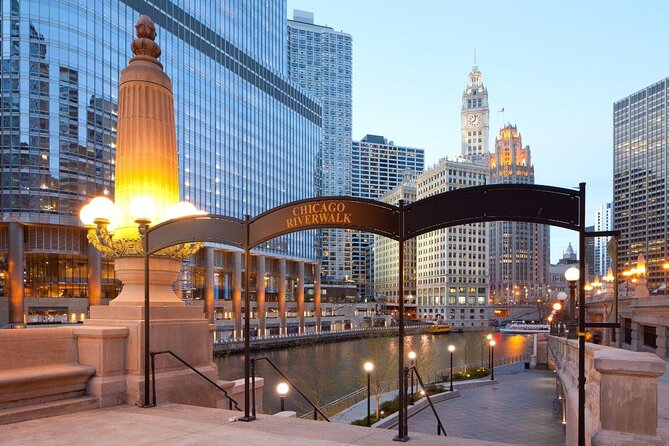
At $44 per person, this is more than a march past famous facades. Colin links the landmarks to the people, ideas and civic ambitions behind them, so you get a downtown introduction as well as a collection of photo stops. His style is energetic and funny, but the substance matters: visitors describe learning about buildings and city history they had not noticed before, including longtime Chicago residents.
The tour lasts about two hours and covers roughly two miles. That is a useful format if you have limited time in the Loop and want an organized introduction to its architecture and art without committing half a day. Morning and afternoon departures give you a choice of timing.
The group limit of 10 is another plus. A small group is easier to keep together in busy downtown streets, and it leaves more space for questions than a large coach-style tour. Colin also uses photos and footage to support his explanations. That can help when a building’s past or an architectural feature is not obvious from the sidewalk.
Chagall’s Four Seasons sets the tone
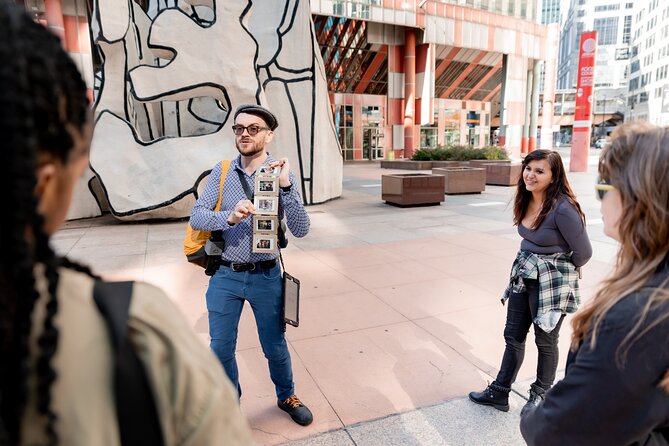
The first stop is Chagall’s Four Seasons, a large mosaic mural that gives the tour an immediate splash of color and texture. You have about 15 minutes here, enough time to look closely and hear how this work fits among Chicago’s public art and architectural achievements.
This is a strong opening because it asks you to slow down and look, rather than treating downtown as a backdrop to rush past. Colin’s approach, with specific stories and visual support, helps turn a large artwork into more than a quick snapshot. If you enjoy art but don’t want a museum-only tour, this stop offers a useful bridge between public art and the city around it.
More history tours around Chicago:
- Chicago in a Day: Food, History & Architecture Walking Tour
★ 5.0 · 1,153 reviews - Chicago: Field Museum of Natural History Ticket or VIP Tour
★ 4.7 · 717 reviews - Field Museum of Natural History Admission Tickets
★ 4.5 · 489 reviews
The Marquette Building and the Rookery reveal Chicago’s older towers
At the Marquette Building, the tour takes in both the exterior and interior of one of Chicago’s oldest skyscrapers. The 10-minute visit is brief, but the change from street view to interior gives you a better sense of the building as a place, not just a facade.
The Rookery follows, with about 15 minutes to see what is described as Chicago’s oldest skyscraper and one of its most striking buildings. Its interior is a particular draw. The stop lets Colin connect the city’s early skyscraper era to the way Chicago developed upward, while giving you time to notice details you might otherwise pass without a second glance.
These two visits are among the tour’s most rewarding architectural stops. The practical benefit is simple: you don’t need to know much about architecture in advance. Colin explains what you’re seeing, and the visual variety helps keep the history grounded in actual places.
Calder’s Flamingo and Picasso’s sculpture bring art outdoors

At Calder’s Flamingo, modern sculpture meets modern architecture in a downtown setting. The stop also connects Calder’s work with the architecture of Mies van der Rohe, making this more than a single-artwork photo break. You’ll have about 10 minutes to take it in and hear how the two forms relate.
Picasso’s Untitled is another brief but memorable pause. The monumental sculpture stands 50 feet tall and was a gift to Chicago. Its scale makes it hard to miss, but Colin’s explanation helps give the work context beyond its size. The tour spends about 10 minutes here.
Together, these stops show how Chicago’s public spaces make room for art that can feel surprising beside office towers and busy streets. You don’t need to be an art specialist to appreciate the contrast. If you’re curious about how a city lives with large-scale modern art, these are among the most distinctive moments on the route.
Chicago Theatre connects architecture with performers
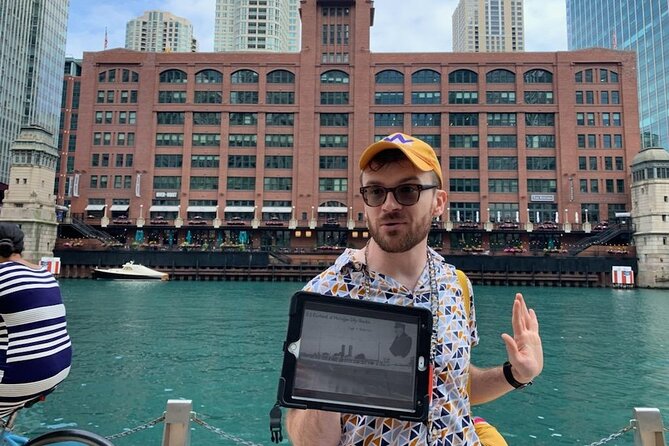
The Chicago Theatre gets about 15 minutes, the longest single stop after the opening and the Cultural Center. You’ll look closely at the iconic theater and hear about the city’s entertainers and the inspirations tied to them over the years.
There is an important distinction here: admission to the Chicago Theatre is not included. The itinerary focuses on seeing the landmark and hearing its story, so don’t assume this stop includes an indoor theater visit. Even from outside, it provides a change of subject from skyscrapers and sculpture, bringing the city’s performance history into the walk.
More Chicago tours and tickets around Chicago:
- Chicago Architecture River Cruise
★ 5.0 · 15,756 reviews - Chicago River 90-Minute Architecture Tour
★ 4.5 · 9,629 reviews - Chicago River: 1.5-Hour Guided Architecture Cruise
★ 4.8 · 8,046 reviews - Chicago: Gangsters and Ghosts Walking Tour
★ 5.0 · 7,155 reviews
Macy’s on State Street traces the department-store era
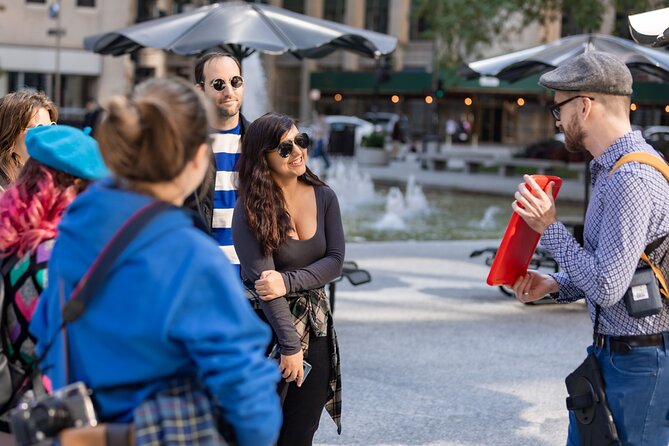
At Macy’s on State Street, Colin turns to the former Marshall Field’s department store and Chicago’s role in shaping the modern department store. Marshall Field’s was once the largest department store in the world, a fact that helps explain why this building belongs on a city-history tour rather than only a shopping itinerary.
The stop lasts about 10 minutes, and the interior offers a visual highlight: the Tiffany Dome. The building’s scale and decorative details help make the story of retail history tangible. You can connect the idea of the department store to a real downtown institution, rather than hearing it as an abstract business-history lesson.
This visit also shows the tour’s knack for bringing you into places you might not think to enter on your own. If the details catch your eye, make a note to return at a slower pace. Ten minutes is enough for an introduction, not a full architectural inspection.
The Cultural Center ends at the People’s Palace
The tour concludes at the Chicago Cultural Center, known as the People’s Palace. This building has a library legacy and is valued for its architecture and history. You’ll have about 15 minutes here, which gives the walk a fitting final stop: a public building whose story is tied to access, learning and civic life.
The Cultural Center is also a good place to pause after a route full of details. The end point is at 78 E Washington Street, while the tour begins at 1 N Dearborn Street. The two addresses are downtown, and the walk connects them through a sequence of buildings and public spaces rather than returning to the starting point.
Colin’s style is part of the value
A city tour depends on its guide, and Colin is central to this one. His manner is warm, upbeat and often witty, with history presented in a way that keeps the walk lively. He brings supporting images and footage, and the stories often include details that are easy to miss if you simply walk past a building.
The experience is not a formal lecture. Expect a conversational tour with chances to ask questions, take photographs and hear suggestions for other things to see in Chicago. Some people who live in the city have found the material fresh, which is a good sign for visitors who want more than a quick checklist of landmarks.
There is one practical point to keep in mind. One participant felt that Colin crossed streets before everyone had reached the crossing, leaving slower walkers or people taking photos behind. That is a useful reminder to stay attentive and let the guide know if you need the group to wait. The group is small, but downtown crossings can still split people up if everyone moves at a different pace.
What the walk asks of you

The route is described as an adventurous two-hour, two-mile experience with indoor and outdoor sections, stairs, elevators and escalators. The walking pace is generally considered manageable, and the stops break up the distance. Still, this is a walking tour, not a seated sightseeing option, and the varied access between spaces may require some flexibility.
Chicago weather can shape the day. The route includes outdoor stretches, so bring an umbrella if rain is in the forecast and dress for the conditions. Colin has adapted to rain by shifting to underground walkways, and the route includes enough indoor stops to offer some shelter, but the tour still depends on good weather. If poor conditions force a cancellation, you are offered another date or a full refund.
Service animals are allowed, and the tour is near public transportation. The booking confirmation arrives when you reserve. The tour is offered in English, costs $44 per person and is often booked around 18 days in advance, so plan ahead if you have a particular date or departure time in mind.
Is $44 a fair price?
For a two-hour guided walk, $44 is a considered purchase, but the value comes from more than the number of stops. You get a small group, a guide who connects art and architecture to Chicago’s history, and access to interiors and details you might not seek out by yourself. Colin’s visual aids and storytelling add something a self-guided route cannot easily provide.
The price is less compelling if you want a long visit inside each building or prefer to explore entirely at your own pace. The tour gives each stop a limited amount of time, and admission to the Chicago Theatre is not included. Think of it as a compact orientation with a strong guide, not a substitute for a full museum visit or a day spent studying architecture.
Who will get the most from this tour
This walk suits first-time visitors who want to understand the Loop through its buildings, public art and cultural history. It also works for Chicago residents who want to notice familiar places with fresh eyes. Families, couples, solo visitors and small groups all fit the format, though everyone should be comfortable with a two-mile walk and changing between indoor and outdoor spaces.
You’ll especially appreciate it if you enjoy stories as much as sights. The tour has a broad range: a Chagall mosaic, two historic skyscrapers, modern sculpture, a theater, a department store and a library-turned-cultural center. That variety keeps the route from feeling like an architecture class, while still giving you plenty to look at.
If you mainly want to shop, spend extended time in museums or avoid walking, choose another activity. But if you want a personable introduction to central Chicago with history, humor and striking buildings, this is a strong use of two hours. I’d book it early, wear comfortable shoes and leave a little time afterward to revisit the interiors that caught your eye.
FAQ
How long is the tour?
The tour lasts about two hours and covers approximately two miles.
How much does it cost?
The price is $44 per person.
Where does the tour start and end?
It starts at 1 N Dearborn Street and concludes at the Chicago Cultural Center, 78 E Washington Street.
Is the tour offered in the morning or afternoon?
Yes. Morning and afternoon tour options are offered.
How large is the group?
The maximum group size is 10 travelers.
Is admission to the Chicago Theatre included?
No. Admission to the Chicago Theatre is not included.
What happens if poor weather cancels the tour?
You’ll be offered a different date or a full refund.
Just added around Chicago
- Travel between Chicago O’Hare and Madison★ 4.5 · 4 reviews
- Walking Tour: Historic Chicago Pubs in River North and the Loop★ 5.0 · 9 reviews
- Verse Immersive Holographic Theater in Chicago★ 4.5 · 28 reviews
- Professional Photo Shoot in Chicago★ 4.5 · 8 reviews
- Private Transfer from Chicago Airport (ORD)★ 3.5 · 3 reviews
- The Devil in the White City: A Haunting History Tour★ 4.5 · 17 reviews
- 2 Hour Chicago Landmarks & Lakefront E-Bike Tour★ 5.0 · 4 reviews
- Chicago Scavenger Hunt Adventure★ 5.0 · 5 reviews
Chicago Tours, compared.
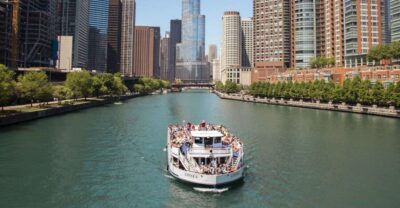
Chicago River: 1.5-Hour Guided Architecture Cruise
Read our review →
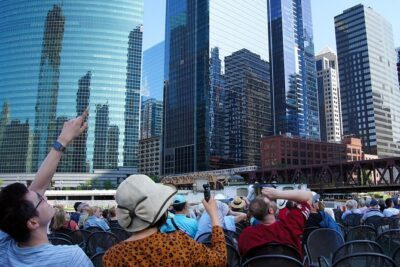
Chicago Architecture Center River Cruise aboard First Lady
Read our review →

Architecture River Cruise Skip-the-Ticket Line
Read our review →
Browse the lists this tour appears in