
Reviewed · CHICAGO ARCHITECTURE TOURS
Chicago Art Deco Madness Walking Tour
Chicago’s Loop rewards anyone who looks above street level. On this 1-hour-45-minute walk, guide Ronnie Frey points out the geometric patterns, sculpted details, and polished interiors that can be easy to miss when you’re hurrying past the city’s 1920s towers.
I like that the tour links about seven Art Deco buildings with their stories, rather than treating them as a checklist of façades. I also like the small group, capped at 10, which gives you room to ask questions and keep close to the guide.
One consideration: access inside some buildings depends on whether the lobby or arcade is open. You’ll see the exteriors either way, but the interior portions are not guaranteed, so plan on a walk that can vary a little from one day to another.
What to know before you go
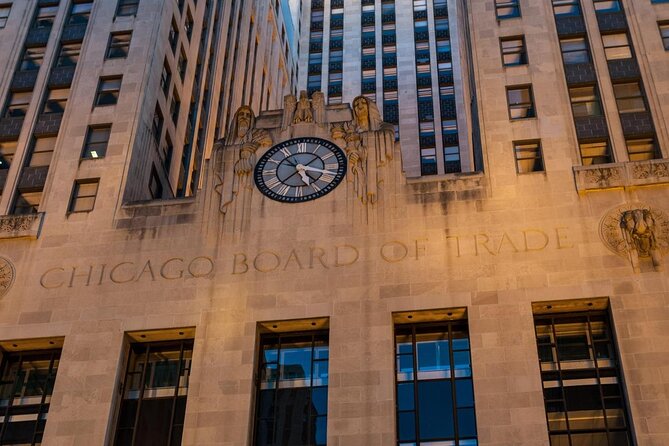
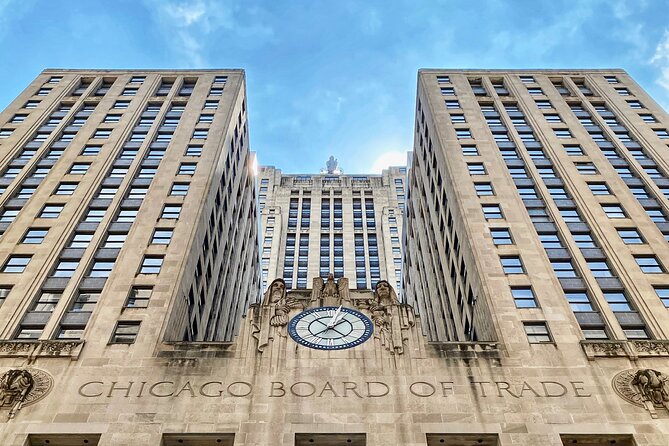
- Look up at the Board of Trade: The tour starts with the details on this landmark’s exterior and may include its lobby when open.
- Expect more than Art Deco: The route also includes a Gothic church, two famous outdoor sculptures, and Macy’s historic interior.
- Keep the group small: A maximum of 10 people makes it easier to hear the guide and ask about details.
- Allow nearly two hours: The walk lasts about 1 hour 45 minutes and crosses the Loop and part of the North Michigan Avenue corridor.
- Watch the clock at Macy’s: The former Marshall Field store has a Tiffany glass atrium and two 7-ton bronze clocks.
- Know the access caveat: Some interior stops are conditional, while the tour’s exterior architecture remains part of the route.
Why the Loop is a good place to look for Art Deco
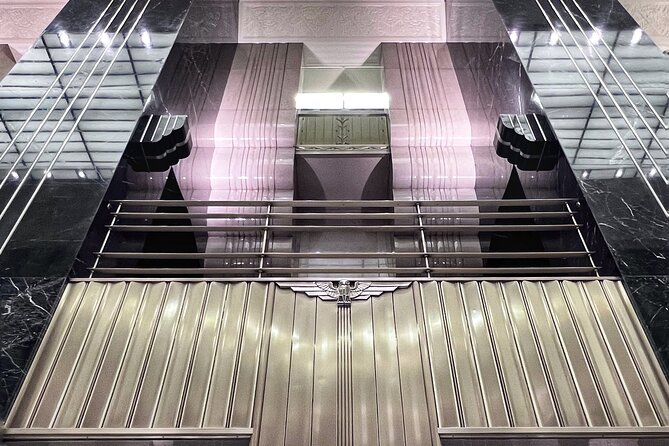
Art Deco is often easiest to recognize once someone points out what to notice. Chicago’s Financial District offers a useful outdoor classroom: towers rise above the sidewalks, and their entrances and façades pack in details that can disappear into the daily flow of downtown. Here, the style becomes easier to read when your guide draws your eye to the surfaces and explains how design and period history fit together.
Ronnie Frey brings a useful perspective to that task. He is an interior designer and historic architecture expert, and the walk takes in both outdoor façades and selected indoor spaces when they are open. That mix matters. Exterior views help you see a building in its street setting; stepping into a lobby or arcade lets you examine the decoration at closer range.
The tour also adds context beyond architectural labels. Its focus is the Roaring Twenties, and the route can connect buildings with stories from the period, including mob history. You don’t need to arrive with a design vocabulary. The pleasure is learning how to notice details you might otherwise walk past.
More architecture tours around Chicago:
- Chicago Architecture River Cruise
★ 5.0 · 15,756 reviews - Chicago River 90-Minute Architecture Tour
★ 4.5 · 9,629 reviews - Chicago River: 1.5-Hour Guided Architecture Cruise
★ 4.8 · 8,046 reviews
At the Board of Trade, start by looking up
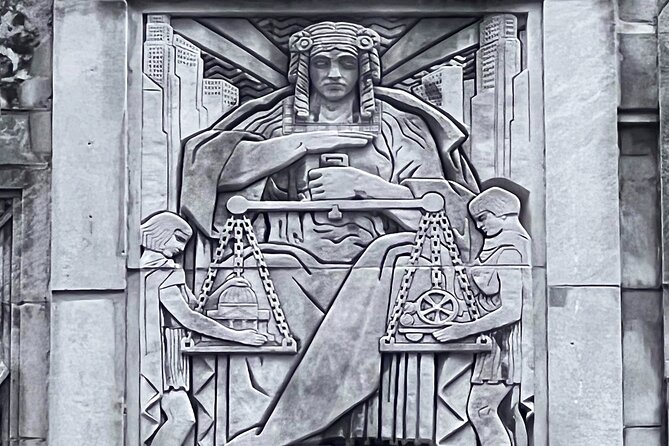
The Chicago Board of Trade Building gets about 20 minutes, making it the longest scheduled stop. That gives you time to take in the exterior and, if the lobby is open, see its interior details too. Even from outside, it is a strong opening example of the tour’s main idea: a downtown building can be more than a backdrop if you know where to focus.
The interior possibility adds value, but it is not guaranteed. The description says the lobby visit happens when open, so don’t count on a particular interior being available on your date. The guide can still explain the exterior, and the stop remains a substantial one on the route.
Afterward, the walk includes a distant view of a striking red sculpture. Since the view is described as distant, think of this as a brief visual pause rather than a close-up sculpture visit. It also offers a change of pace between the architecture stops.
LaSalle Street’s towers reward a closer look
The route continues to 135 South LaSalle Street, where you’ll get about 15 minutes to study the exterior and, if access permits, its interior arcade. Arcades and lobbies can make a building feel different from the street-facing tower above them. If the interior is open, you’ll see more of the design than a sidewalk view alone can provide.
One North LaSalle Street gets another 15 minutes, with attention to its exterior and possible lobby access. The time at these stops is enough to pause and listen without turning the tour into a long indoor visit. The practical trade-off is that the route depends partly on access conditions, so some days may offer more interior viewing than others.
At 33 North LaSalle Street, the group spends about 10 minutes on the exterior. This shorter stop suits the overall rhythm: the guide can point out design features, then move you along to the next example. If you enjoy comparing buildings, these three LaSalle stops help you see how Art Deco details appear across nearby structures rather than in just one famous tower.
The close grouping also gives the walk a clear focus. You’re not spending the whole tour crossing town between isolated attractions. Instead, the buildings build on one another, and your eye gets better practice spotting the style as you go.
A Gothic church and two open-air sculptures change the pace
Not every stop is Art Deco. At First United Methodist Church of Chicago, you’ll spend about five minutes looking at the exterior’s Gothic details and see photographs of the interior. The church is described as the tallest church in America, with the nickname chapel in the sky. Since the interior is represented by photos here, don’t expect this stop to include a visit inside.
The contrast is useful. A walking tour devoted to one architectural movement could feel narrow, but this brief detour gives you another style to compare with the geometric lines of the office buildings. It also offers a reminder that downtown Chicago’s architecture is not limited to one decade or look.
Miro’s Chicago and The Picasso add two quick public-art stops, about two minutes each. These are short viewing pauses, not extended talks or museum visits. If outdoor sculpture interests you, they give the walk a welcome change from façades and lobbies; if you prefer a slower art stop, the timing is worth knowing in advance.
More walking tours around Chicago:
- Chicago: Gangsters and Ghosts Walking Tour
★ 5.0 · 7,155 reviews - Chicago Favorites Ultimate Food and Walking Tour
★ 5.0 · 1,962 reviews - Chicago: Gangsters and Ghosts Guided Walking Tour
★ 4.7 · 1,697 reviews - Chicago in a Day: Food, History & Architecture Walking Tour
★ 5.0 · 1,153 reviews
Macy’s brings the tour indoors
Macy’s on State Street is one of the route’s most distinctive stops. You’ll spend about 10 minutes looking at Art Deco motifs inside the former Marshall Field department store, along with its famous Tiffany glass atrium. The stop also includes the two bronze clocks, each weighing 7 tons, known for the old meeting-place tradition of meeting under the clock.
This is a useful counterpoint to the office towers. The building’s interior decoration shows how the period’s design could shape a public commercial space, not only a corporate façade. The clocks add a human detail to the visit: they are large, memorable objects with a place in the city’s everyday lore.
The time is brief, so treat this as an introduction rather than an unhurried department-store tour. Still, it is one of the strongest reasons the experience offers more than an exterior architecture walk. If interior design is your main interest, this stop and the conditional lobbies earlier on the route may be highlights.
Carbide and Carbon closes with a bold façade

The final listed architectural stop is the Carbide and Carbon Building, where the group gets about 10 minutes to examine the exterior and, if open, the interior lobby. Its green terra cotta makes it easy to distinguish from the stone and metal tones around it. That color gives the guide a clear starting point for discussing its Art Deco details.
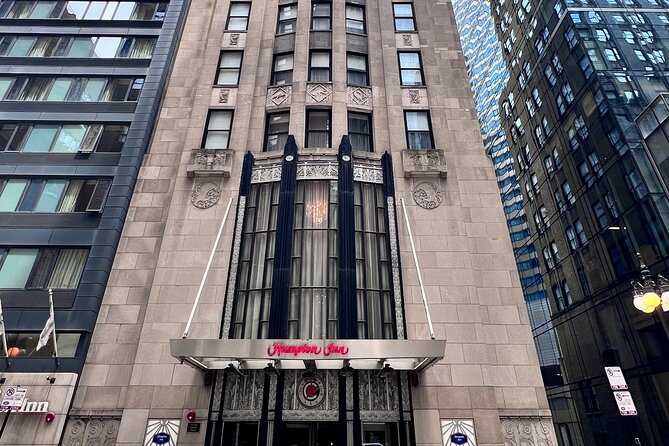
As at the earlier buildings, the lobby visit depends on access. The exterior is the dependable part of the stop, while an open lobby is a welcome extra. The tour ends at 68 East Wacker Place, at the Chicago Motor Club Building, which is now the Hampton Inn Loop.
That endpoint is useful if you want to continue exploring downtown afterward. The tour does not include a scheduled return to the starting address, so consider where you’ll want to go next when planning your day.
What the pace and group size mean for you
At about 1 hour 45 minutes, this is a compact way to see several architectural highlights without giving over an entire day. The listed stop times add up to roughly an hour and a half, leaving time for walking between sites and for the guide to bring the details together. The route is described as an easy walk by people who have taken it, but the formal guidance is that you should have a moderate level of physical fitness.
The group is limited to 10 people. That cap can make a real difference on a city walk: you are less likely to be stranded at the back while the guide explains a detail, and it is easier to ask a follow-up question. The experience is led by Ronnie Frey, whose approach is described as engaging, organized, and enthusiastic about Chicago history, art, architecture, and design. If you want a guide who explains why a building matters, rather than just naming it, that style should suit you.
The walk starts at 11:00 a.m. at Wintrust Mortgage, 231 South LaSalle Street, fourth floor, and ends at 68 East Wacker Place. The tour uses a mobile ticket, and the meeting point is near public transportation. Service animals are allowed. Those details are worth checking before you set out, especially the fourth-floor starting location.
Is $45 a fair price?
At $45 per person, the value depends on what you want from a city walk. You are paying for a guide-led tour of about seven Art Deco buildings, plus the church, sculpture stops, and Macy’s interior, rather than admission to a single attraction. The listed stops have no admission charge, so the main value is the guide’s ability to make the details and history legible.
I think the price is easiest to justify if you care about architecture, design, or Chicago history and would otherwise pass these buildings without noticing much beyond their size. The guide’s explanations are central to the experience; this is not a route where the sights alone tell you everything. If you prefer to explore at your own pace or already know the buildings well, you may get less from a scheduled group walk.
A 4.9 rating from 31 reviews and a 100 percent recommendation rate are encouraging, but they are not a guarantee that every interior will be open or that every stop will suit your interests. The strongest praise centers on the guide’s enthusiasm, the architectural detail, and the way the stories make familiar streets feel newly interesting. That is a good match for the tour’s format.
Weather and booking details to weigh
This experience requires good weather. If poor weather cancels the tour, you’ll be offered another date or a full refund. It also requires a minimum number of participants; if that minimum is not met, you’ll be offered a different date or experience, or a full refund.
For other cancellations or amendment requests, the booking is non-refundable and cannot be changed. That is worth considering before you commit, especially if your Chicago plans are still uncertain. Confirmation is received at booking.
Should you book the Chicago Art Deco Madness tour?
Book it if you want a guided introduction to Chicago’s Art Deco architecture, appreciate interiors as much as façades, or enjoy learning how to read a city’s buildings. The small group, the focused Loop route, and the mix of office towers, public art, church architecture, and Macy’s make it a varied walk for its length.
Think twice if you need guaranteed access to every lobby, want an indoor tour regardless of weather, or prefer a slower visit at each artwork. The best fit is someone curious about design and city history who is happy to spend nearly two hours walking, listening, and looking closely. At $45, it offers a practical, focused way to see more in the Loop than you might on your own.
FAQ
How long is the tour?
The walk lasts about 1 hour and 45 minutes.
What time does the tour start?
The listed start time is 11:00 a.m.
Where does the tour begin and end?
It starts at Wintrust Mortgage, 231 South LaSalle Street, fourth floor, and ends at 68 East Wacker Place, at the Chicago Motor Club Building, now the Hampton Inn Loop.
How many people can join?
The maximum group size is 10 travelers.
Will I be able to go inside the buildings?
Some lobbies and the arcade may be visited when they are open. Interior access is not guaranteed.
What is the price?
The listed price is $45 per person.
What happens if bad weather cancels the tour?
You’ll be offered a different date or a full refund.
Just added around Chicago
- Travel between Chicago O’Hare and Madison★ 4.5 · 4 reviews
- Verse Immersive Holographic Theater in Chicago★ 4.5 · 28 reviews
- Walking Tour: Historic Chicago Pubs in River North and the Loop★ 5.0 · 9 reviews
- Professional Photo Shoot in Chicago★ 4.5 · 8 reviews
- Private Transfer from Chicago Airport (ORD)★ 3.5 · 3 reviews
- The Devil in the White City: A Haunting History Tour★ 4.5 · 17 reviews
- 2 Hour Chicago Landmarks & Lakefront E-Bike Tour★ 5.0 · 4 reviews
- Chicago Scavenger Hunt Adventure★ 5.0 · 5 reviews
Chicago Architecture Tours, compared.
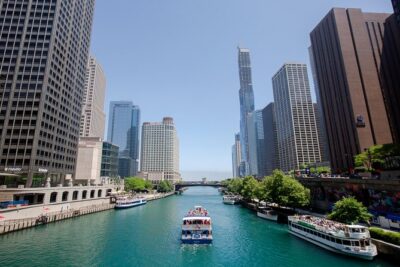
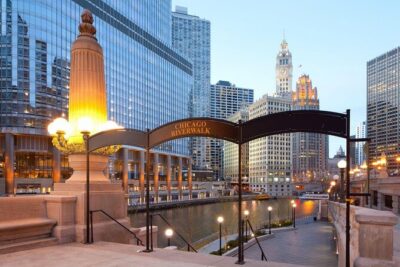
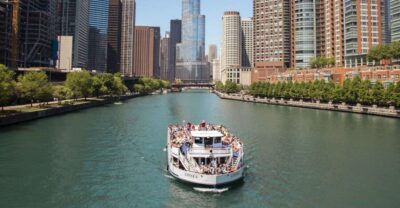
Chicago River: 1.5-Hour Guided Architecture Cruise
Read our review →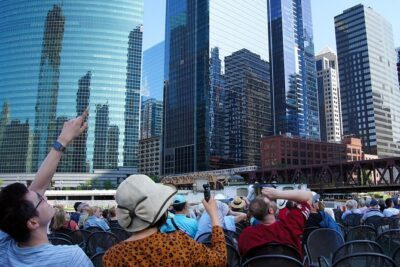
Chicago Architecture Center River Cruise aboard First Lady
Read our review →
Architecture River Cruise Skip-the-Ticket Line
Read our review →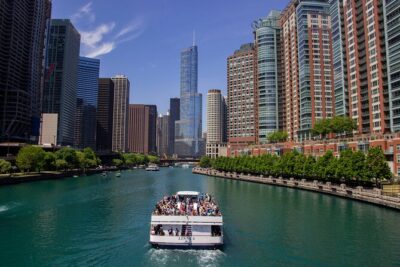
Chicago River 45-Minute Architecture Tour from Magnificent Mile
Read our review →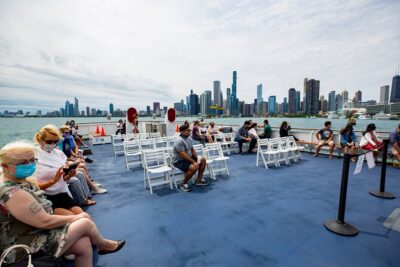

45-Minute Family-Friendly Architecture River Cruise
Read our review →Browse the lists this tour appears in