
Reviewed · CHICAGO ARCHITECTURE TOURS
Chicago: Art Deco Skyscrapers Walking Tour
Chicago’s Art Deco story is best read indoors. On this 90-minute walk, you step into the lobbies of five skyscrapers built during the Roaring ’20s and see how geometric ornament, colorful surfaces and lavish materials brought a modern style into the heart of the city.
I like two things in particular: the chance to see five interiors that are easy to pass without entering, and the guidance of a Chicago Architecture Center docent trained to explain the city’s buildings and history. One consideration: the tour runs rain or shine, and there’s no secure storage for bags or strollers.
Key points before you book
- Five Art Deco lobbies: Go inside landmark skyscrapers near the Chicago River, not just past their street façades.
- A style with recognizable clues: Learn to spot zigzags, octagons, sunbursts and floral designs.
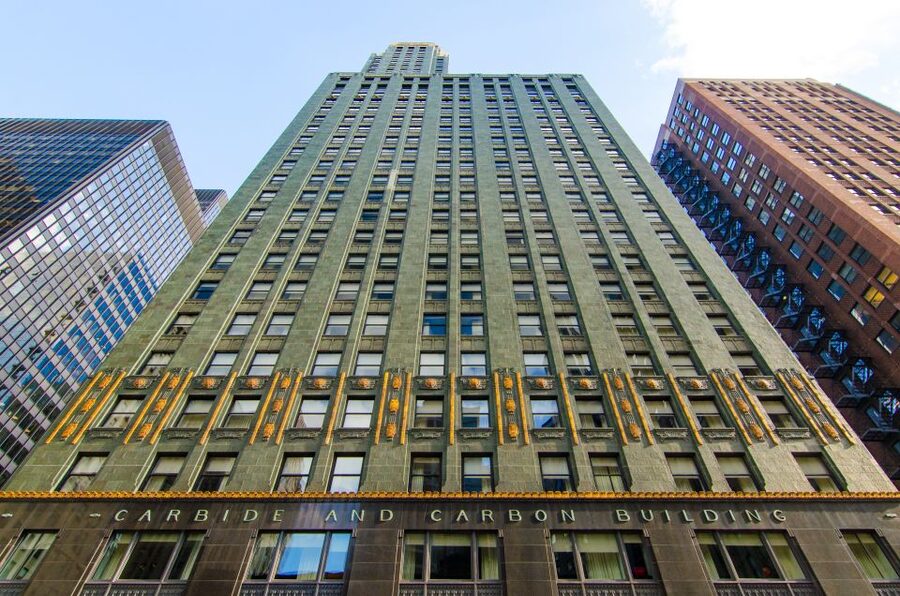
- Four buildings are named: The route includes the Carbide and Carbon Building, Chicago Motor Club Building, Trustees System Service Building and Engineering Building.
- An expert-led small group: A Chicago Architecture Center certified volunteer docent leads up to 10 participants.
- A useful indoor extra: Tour admission includes entry to the Chicago Architecture Center exhibits.
- Come light: Pets, luggage and large bags are not allowed; there is no storage for luggage or strollers.
Why Art Deco suits Chicago’s skyscrapers
Art Deco arrived in Chicago in the 1920s, after the style appeared at an international art exposition in Paris. The city’s 1933 and 1934 Century of Progress Exposition helped make it familiar to a wider audience. In a place already known for bold architecture, the style found a natural home in buildings designed to signal energy, prosperity and modern life.
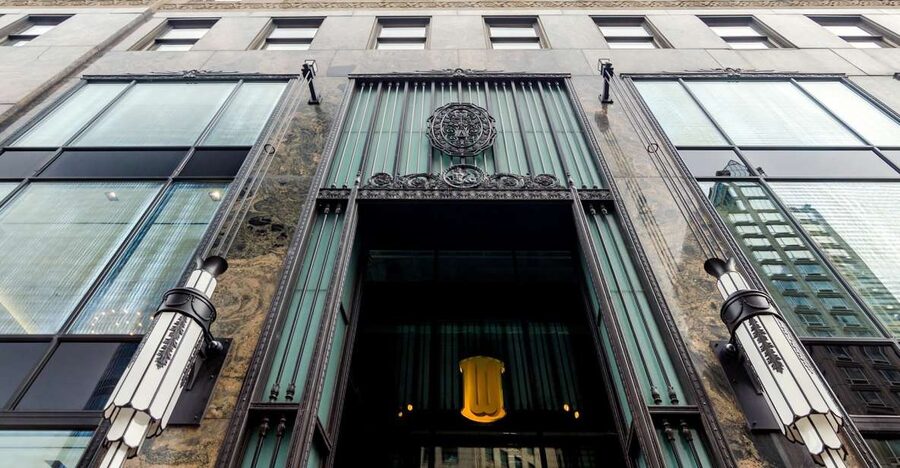
The tour gives you a practical way to recognize the style. Rather than treating Art Deco as a label, your docent points to its shapes and decorative language: zigzags, octagons, sunbursts and flowers. Those motifs drew on influences that included Cubism and the art and architecture of the ancient Middle East. Once you know what to look for, the details become easier to spot on both the exterior and inside.
That context matters because Art Deco can be mistaken for mere decoration. Here, ornament is part of the building’s identity. Geometric forms and lavish materials helped make offices feel impressive and forward-looking, while the skyscraper’s height made that confidence visible from the street. The tour connects those ideas to actual buildings, so you can see how a style translates into stone, metal, color and patterned surfaces.
The setting adds another layer. These skyscrapers rose near the Chicago River during the business boom of the Roaring ’20s. Their lobbies were designed to make an impression on people entering the buildings, not only on those looking up from outside. Walking inside gives you a more complete sense of how architecture shaped daily business life.
More architecture tours around Chicago:
- Chicago Architecture River Cruise
★ 5.0 · 15,756 reviews - Chicago River 90-Minute Architecture Tour
★ 4.5 · 9,629 reviews - Chicago River: 1.5-Hour Guided Architecture Cruise
★ 4.8 · 8,046 reviews
What the 90-minute walk is like
Plan for a compact city walk with several indoor stops. You meet at 30 N LaSalle Street, where the docent checks your name against the attendee list. Arrive 10 minutes early and keep your confirmation handy. The group is limited to 10 people, which gives the guide room to speak with the group and lets you look closely at details without the feel of a large tour.
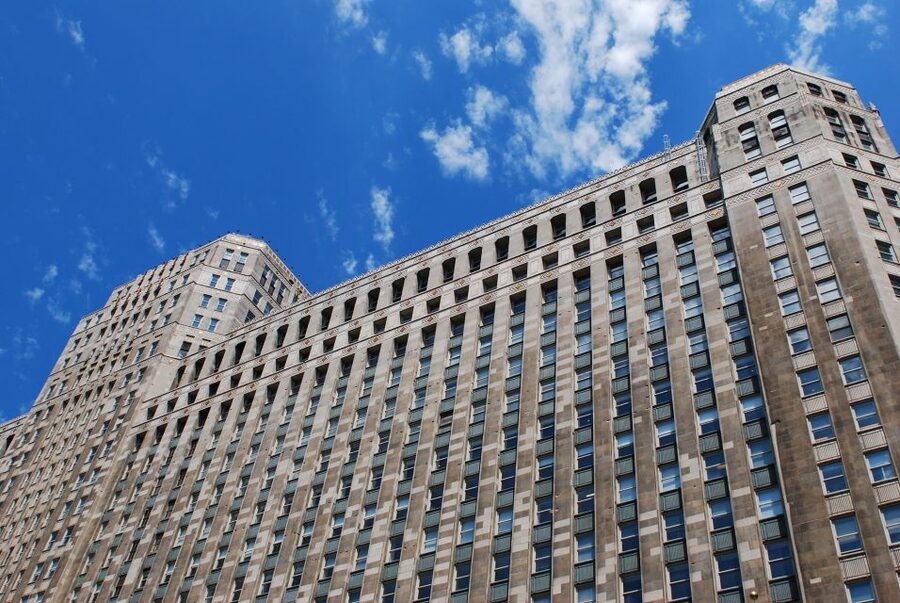
The route visits five Art Deco skyscraper lobbies near the river and ends at the Merchandise Mart. Four buildings are specifically identified: the Carbide and Carbon Building, now the St. Jane Hotel; the Chicago Motor Club Building, now the Hampton Inn; the Trustees System Service Building, now Century Tower; and the Engineering Building. The exact fifth building is not named in the tour information, so it’s best not to assume which one it will be.
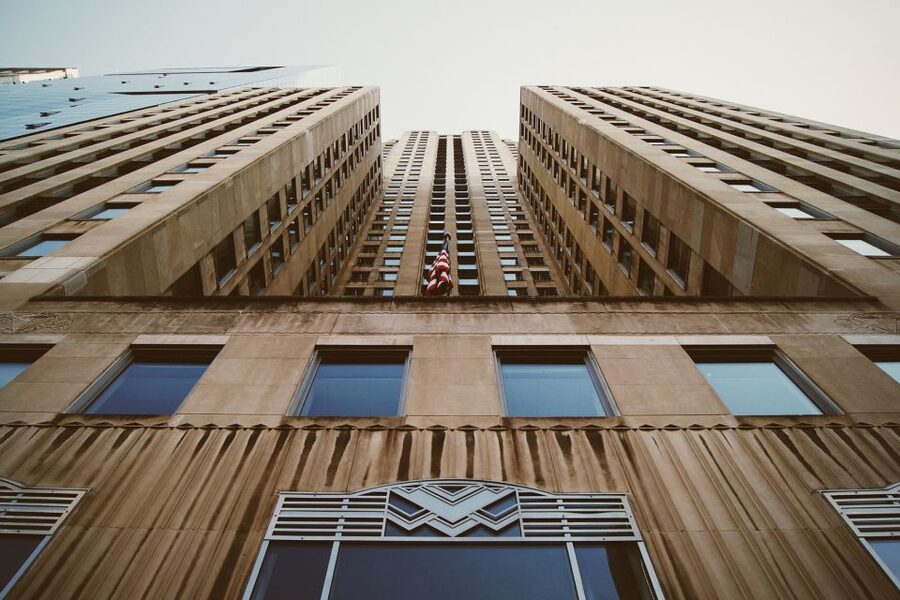
The experience is built around entering buildings. That is the main distinction between this walk and a general architecture stroll: you get to see the interiors of five skyscrapers, where decoration and materials can be appreciated at close range. You’ll also hear about the buildings’ exteriors and how Art Deco contributes to their soaring appearance.
A docent from the Chicago Architecture Center leads the walk in English. These volunteer guides receive hundreds of hours of training in Chicago architecture and history. Their job is not just to name a building or point to a motif, but to tell the story behind what you’re seeing. The strongest praise for the tour has focused on lively, detailed explanations and a clear, informative pace. That combination suits a short tour: enough substance to learn something, without turning 90 minutes into a lecture.
The buildings and details you’ll see
The Carbide and Carbon Building, now the St. Jane Hotel, is one of the named highlights. Its place on the route lets your guide connect a landmark skyscraper to the Art Deco style and the city’s building boom. The tour’s emphasis is on the structure’s exterior and its opulent interior spaces, giving you a chance to see the building from more than the sidewalk.
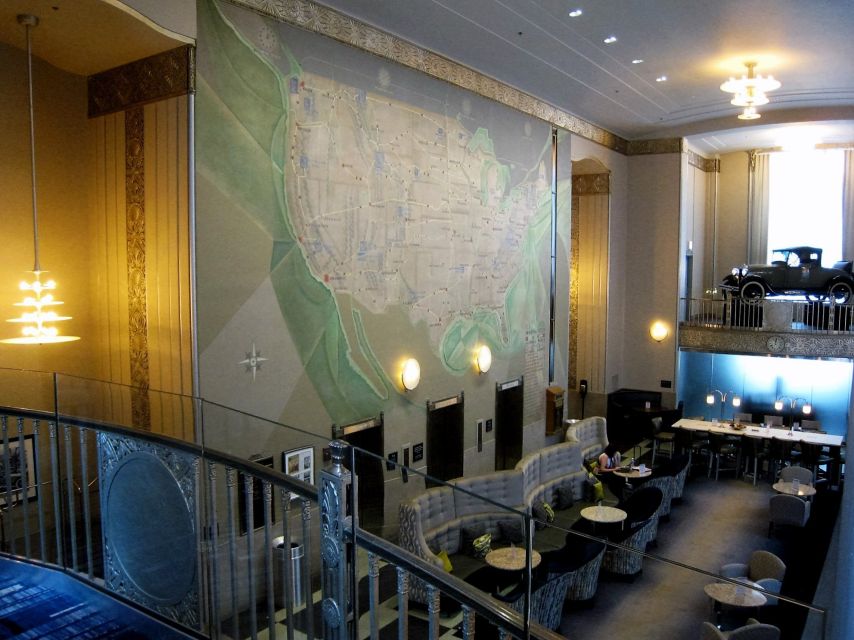
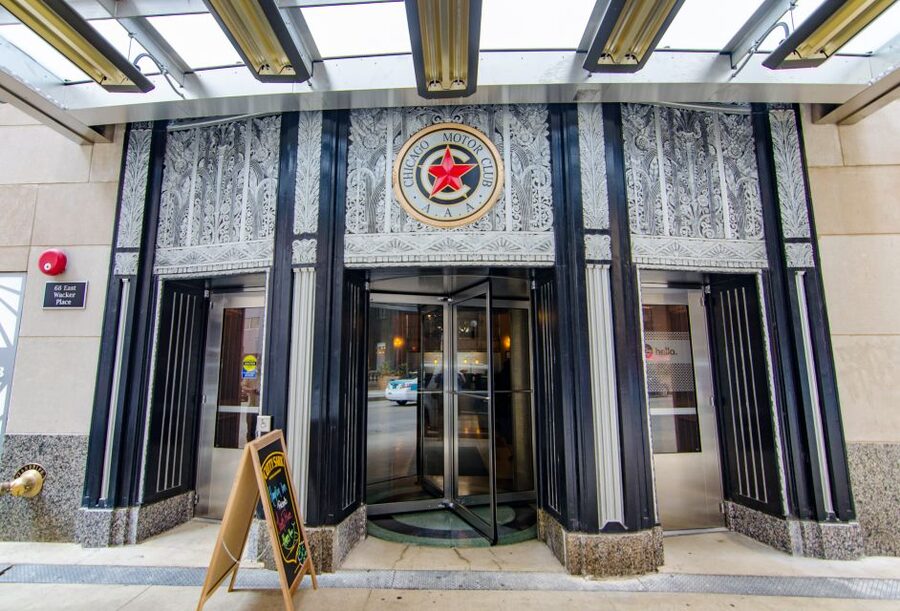
The Chicago Motor Club Building, now a Hampton Inn, offers another example of how a landmark building can remain part of the city’s working life. You enter its lobby as part of the tour, rather than treating it as a façade to photograph from outside. If you’ve passed the building before without knowing what lies beyond its entrance, this is the sort of stop that can change how you read the block.
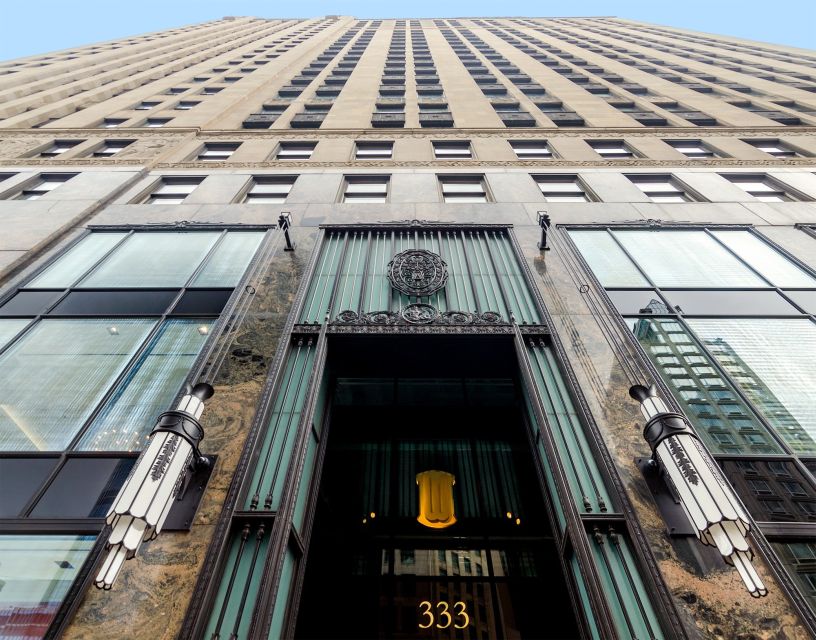
The Trustees System Service Building, now Century Tower, is described as colorful and often overlooked. That makes it a useful counterpoint to the better-known names. Art Deco is not only about the most famous skyline buildings; color and geometric decoration can make a less familiar structure worth a closer look. Your guide can help you spot those features and place them in the wider style.
The Engineering Building is also among the Chicago landmarks included. The provided details do not specify which features the docent emphasizes here, so go ready to compare rather than expecting a particular room or design element. The value is in seeing several examples in one walk and learning how the style changes from building to building.
The tour promises entry to five iconic Art Deco buildings, though only four are named in the available details. The Merchandise Mart is the stated endpoint, but there is no explicit confirmation that it is the unnamed fifth interior stop. If knowing every building in advance matters to you, ask the operator before booking.
Inside the lobbies, give yourself time to look up, down and across. The tour is designed to reveal motifs and materials, not simply to move you from one address to another. A guide’s explanation can make repeated shapes easier to recognize and help you understand why geometric ornament suited the period’s optimism. The tour does not promise access to upper floors or private spaces, so think of it as a focused look at landmark interiors, not a full building visit.
Is the price worth it?
The stated price is $35 per group of up to one person, with the tour lasting 90 minutes. For a solo visitor, that means the listed price covers one participant. Since the format is a small guided group and admission to five building interiors is included, the cost buys more than a route map and a walk past façades. You’re paying for access, interpretation and the docent’s preparation.
The value is strongest if you care about architecture or want an informed introduction to Chicago’s downtown buildings. You can walk the same streets on your own, but you would miss the guided explanations and the organized entry into five lobbies. For someone who enjoys looking closely at buildings, those differences can justify the cost.
Admission to the Chicago Architecture Center exhibits is also included. That gives you an extra way to follow up on the city’s architecture beyond the tour itself. The Center’s ticket income supports local education and community programs, including Girls Build!, Teen Fellows, the Newhouse Architecture + Design Competition and Open House Chicago. If you value a tour that contributes to local initiatives, that is a welcome part of the purchase.
The walk may be less appealing if you want a long, highly flexible visit to each building. Ninety minutes is a short window for five interiors, and the group follows a guided route. This is a sampler with expert context, not an unhurried architectural study of every stop.
More walking tours around Chicago:
- Chicago: Gangsters and Ghosts Walking Tour
★ 5.0 · 7,155 reviews - Chicago Favorites Ultimate Food and Walking Tour
★ 5.0 · 1,962 reviews - Chicago: Gangsters and Ghosts Guided Walking Tour
★ 4.7 · 1,697 reviews - Chicago in a Day: Food, History & Architecture Walking Tour
★ 5.0 · 1,153 reviews
Practical details that shape the day
The tour is wheelchair accessible and operates in English. It is limited to 10 participants, a helpful size for hearing the docent and keeping the group together as it moves through downtown. Check available start times when you choose a date, as the tour duration is fixed at 90 minutes.
Dress for the weather and plan to walk outdoors between buildings. Tours depart rain or shine, and the operator does not provide weather-related refunds. The indoor stops make this less exposed than a fully outdoor walk, but you still need to be comfortable getting between addresses in whatever conditions the day brings.
Travel light. Pets are not permitted, though service animals are welcome. Luggage and large bags are prohibited, and there is no secure storage for luggage or strollers. If you’re arriving directly from the airport or checking out of a hotel, arrange to leave your belongings elsewhere before meeting the group.
You can cancel up to 24 hours in advance for a full refund, and the reserve-now, pay-later option lets you hold a place without paying immediately. Those terms are useful if your schedule is still taking shape, but they do not change the rain-or-shine policy on the day of the walk.
Who should book this walk
I’d choose this tour if you want a short, well-guided introduction to Art Deco and would rather see the interiors than settle for exterior views. It’s a good fit for architecture fans, first-time visitors interested in Chicago’s built environment, and anyone who likes learning how design choices reflect the period that produced them.
It also works well if you want to add a focused activity to a downtown day. The 90-minute length is easy to plan around, and the small group keeps the experience personal without requiring a full-day commitment. The docent training is a real asset: hundreds of hours of study give guides a foundation for explaining the city’s architecture with detail and context.
I’d think twice if you need luggage storage, want a tour that can be canceled for bad weather, or prefer to explore each building at your own pace. The route is brief and guided, and not every stop’s name is supplied ahead of time. But if the idea of stepping into five Art Deco lobbies appeals more than simply admiring Chicago’s skyline from the street, this is a solid-value way to see the style up close.
FAQ
How long is the Art Deco skyscrapers tour?
The walking tour lasts 90 minutes.
Where does the tour meet?
Meet at 30 N LaSalle Street. Arrive 10 minutes before departure with your confirmation ready.
Where does the tour end?
The tour ends at the Merchandise Mart.
How many buildings do you enter?
The tour includes entry into five Art Deco buildings. Four are named in the tour details: the Carbide and Carbon Building, Chicago Motor Club Building, Trustees System Service Building and Engineering Building.
Who leads the tour?
A Chicago Architecture Center certified volunteer docent leads the tour in English. Docents receive hundreds of hours of training in Chicago architecture and history.
How large is the group?
The tour is limited to 10 participants.
Is the tour wheelchair accessible?
Yes, the activity is listed as wheelchair accessible.
Can I bring luggage, a stroller or a pet?
Luggage and large bags are not allowed, and there is no storage for luggage or strollers. Pets are not allowed, but service animals are welcome.
What happens if it rains, and can I cancel?
The tour departs rain or shine, with no refunds due to weather. You can cancel up to 24 hours in advance for a full refund.
Just added around Chicago
- Travel between Chicago O’Hare and Madison★ 4.5 · 4 reviews
- Walking Tour: Historic Chicago Pubs in River North and the Loop★ 5.0 · 9 reviews
- Verse Immersive Holographic Theater in Chicago★ 4.5 · 28 reviews
- Private Transfer from Chicago Airport (ORD)★ 3.5 · 3 reviews
- Professional Photo Shoot in Chicago★ 4.5 · 8 reviews
- The Devil in the White City: A Haunting History Tour★ 4.5 · 17 reviews
- 2 Hour Chicago Landmarks & Lakefront E-Bike Tour★ 5.0 · 4 reviews
- Chicago Scavenger Hunt Adventure★ 5.0 · 5 reviews
Chicago Architecture Tours, compared.
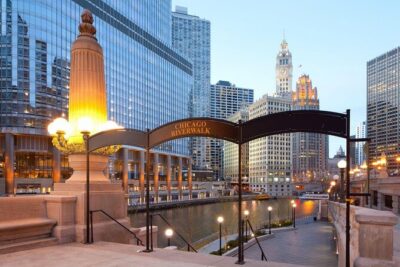
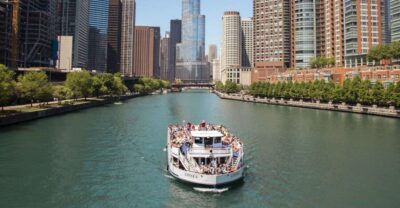
Chicago River: 1.5-Hour Guided Architecture Cruise
Read our review →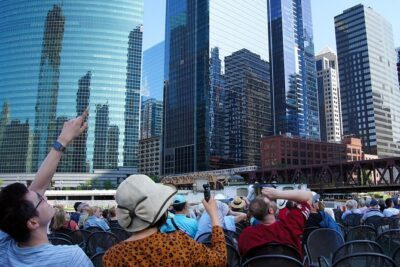
Chicago Architecture Center River Cruise aboard First Lady
Read our review →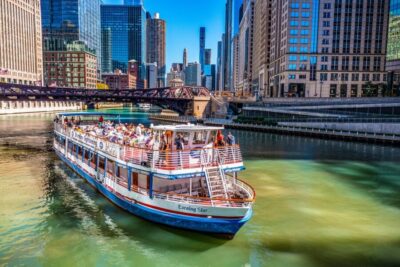
Architecture River Cruise Skip-the-Ticket Line
Read our review →
Chicago River 45-Minute Architecture Tour from Magnificent Mile
Read our review →

45-Minute Family-Friendly Architecture River Cruise
Read our review →Browse the lists this tour appears in