

Reviewed · CHICAGO ARCHITECTURE TOURS
Chicago Loop: Art, Skyscrapers, Millennium Park & “The Bean”
Chicago’s Loop is a city-sized architecture lesson, with ornate department-store interiors, steel-and-glass towers, public sculpture, and elevated trains all packed into a walkable downtown. This two-hour tour links those pieces with a local guide, so you get more than a checklist of famous buildings.
I like the contrast between grand public interiors and outdoor art, and the way the route connects Chicago’s past to its modern image. I also like that the walk changes with the weather, using indoor buildings as warm-up stops when it is cold or rainy.
The main trade-off is time: two hours can introduce the Loop, but it cannot cover every landmark in depth. You will see major public art and architecture, but do not expect a full visit inside the Art Institute or time to linger at every stop.
At a glance
- Start at the Chicago Theatre: Meet your guide at 175 N. State Street, at State and Lake.
- See signature public art: The route includes the Picasso sculpture, Crown Fountain, and Cloud Gate, better known as The Bean.
- Look up and look inside: Expect historic architecture, striking building lobbies, and Tiffany glass.
- Get a local perspective: Live English commentary connects the sights to the Great Fire, city design, and everyday transit.
- Plan for a two-hour walk: The route adapts to the season, with more park time in warm weather and indoor stops in cold or wet conditions.
Starting beneath the Chicago Theatre sign
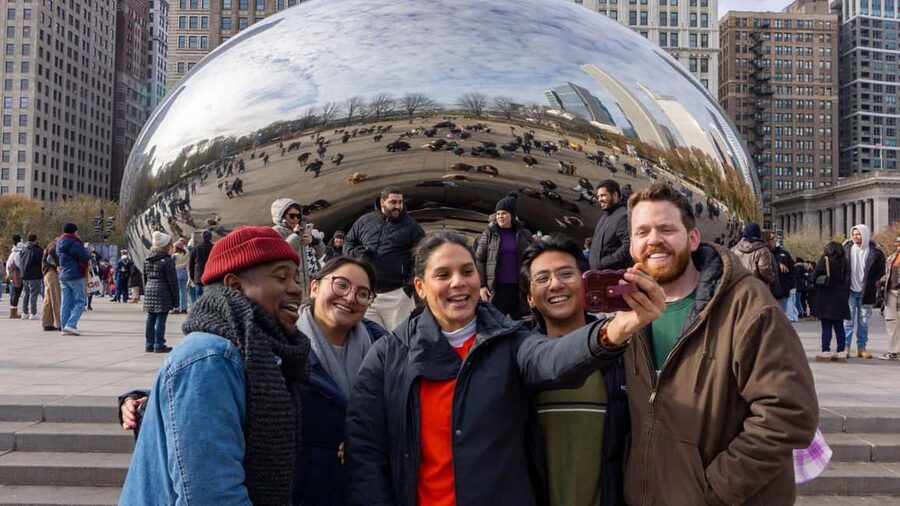
The meeting point is in front of the Chicago Theatre at 175 N. State Street, on the corner of State and Lake. It is a useful place to begin: central, recognizable, and right in the middle of the downtown street grid.
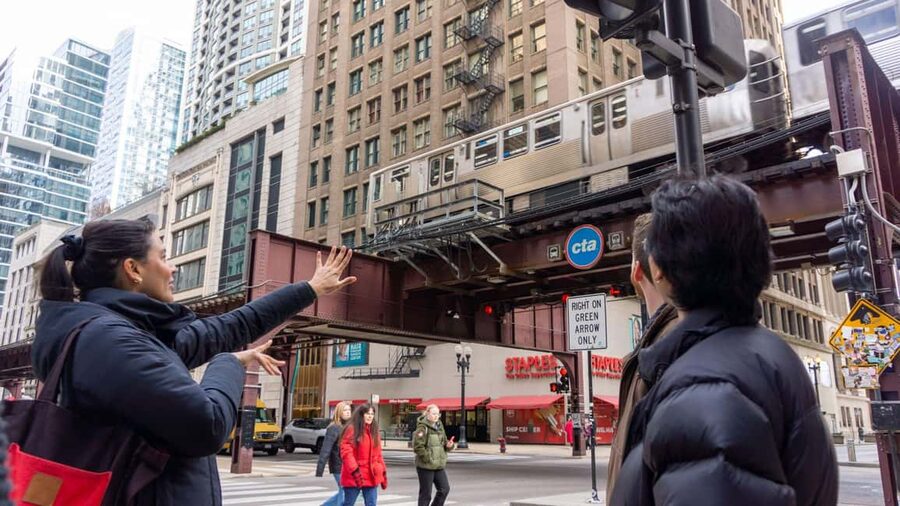
From here, the tour heads into the Loop, the district named for the elevated train lines that circle the downtown area. That name is more than local shorthand. The tracks are part of the city’s daily rhythm, and seeing them overhead helps explain how transit and urban growth shaped this part of Chicago.
This is a walking tour, not a ride on the L. You will get a closer sense of the streets and buildings, though you should be ready to walk between stops and spend much of the time outdoors in fair weather.
More Millennium Park tours around Chicago:
- Chicago: Downtown Loop & Millennium Park 2 Hour Walking Tour
★ 5.0 · 5 reviews - Chicago Millennium Park Self-Guided Walking Tour
★ 4.5 · 5 reviews - Chicago Foods Tour with The Loop, Skyline, Millennium Park
★ 5.0 · 4 reviews
Marshall Field’s, now Macy’s on State Street
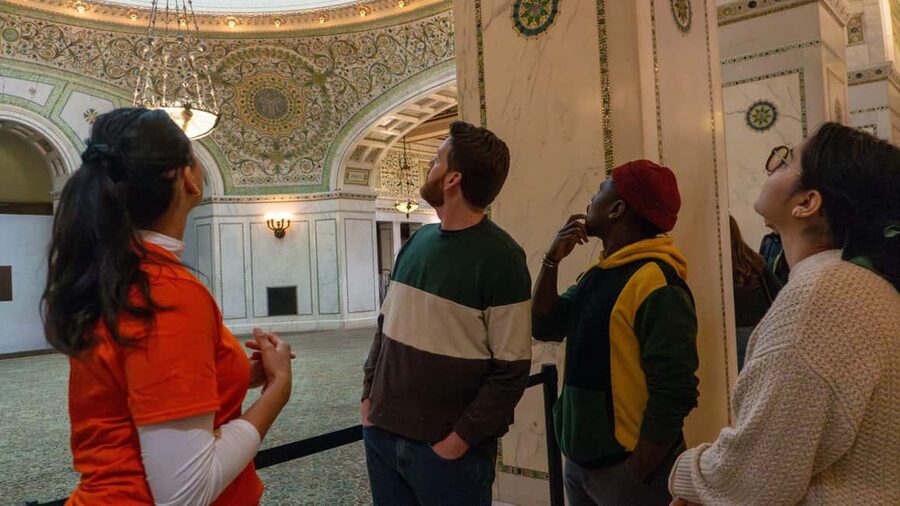
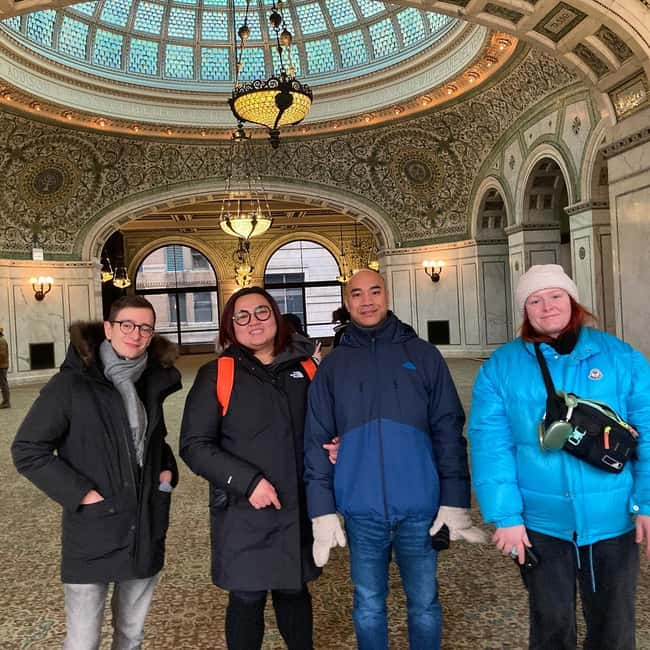
One of the first major stops is the former Marshall Field’s department store, now Macy’s on State Street. It is a reminder that a department store could be a civic landmark, not just a place to shop. Its architecture and public spaces reflect the era when downtown stores drew people from across the city.
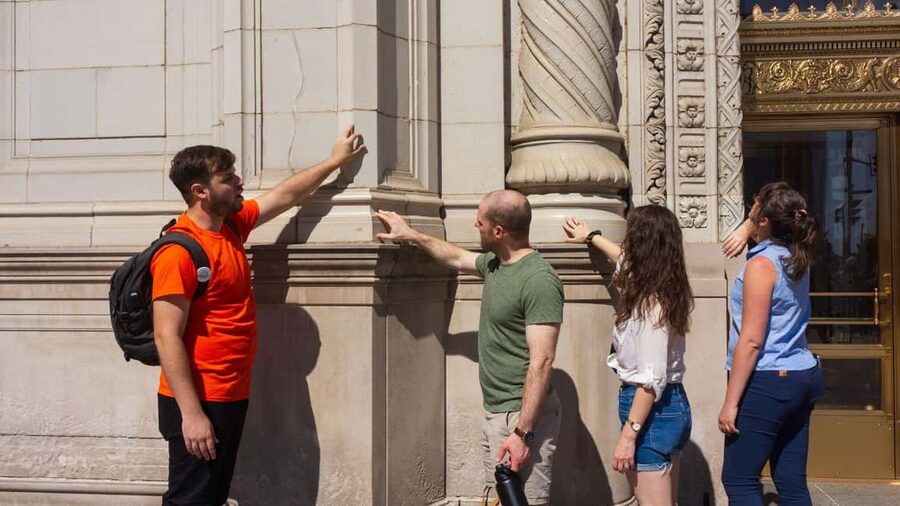
The building gives your guide a chance to explain architectural styles and the role of commercial buildings in Chicago’s story. Look closely at the details rather than treating the facade as a quick photo stop. The tour also highlights Tiffany glass, a distinctive craft that rewards a closer look at color, pattern, and the way light plays through it.
A guided visit is especially useful here because beautiful public buildings can be easy to pass without noticing what makes them special. The route includes time inside some of the city’s notable public buildings and lobbies, though the exact indoor stops can vary with weather and conditions.
The Picasso and the city’s public-art habit
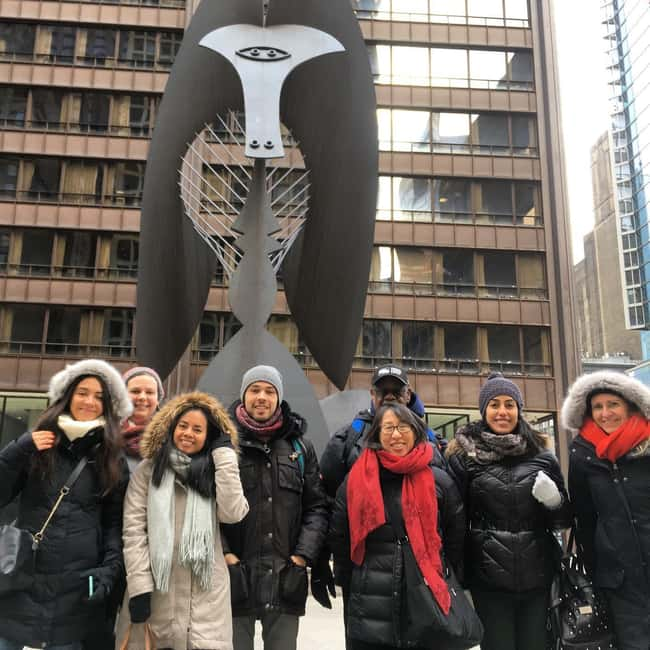
At Daley Plaza, you meet the Picasso, a large steel sculpture given to Chicago by Pablo Picasso. Its abstract form is a sharp change of pace from the historic storefronts and ornate interiors. You do not need to settle on what it represents to appreciate the point: Chicago made room for modern art in the middle of civic life.
That placement matters. This is not art tucked away behind museum doors. It shares a public square with offices, commuters, and city activity, making it part of the everyday view. Your guide can supply context that turns a quick look into a better conversation about how a city chooses to present itself.
The sculpture is a compact stop, so do not expect a long art lecture. Think of it as one clear example in a broader walk that shows how Chicago’s public spaces mix civic function with creative expression.
Millennium Park’s art and open space
The walk continues to Millennium Park, a major public space where art and city life meet. In warmer months, the tour spends more time here, giving you a chance to take in the park’s works and open areas. The amount of time outdoors changes with the season, so the experience is not identical year-round.
Crown Fountain is one of the park’s most playful works. Video images of Chicagoans’ faces appear on the fountain’s towers, with water cascading through the installation. It is a lively contrast to the more formal buildings earlier in the walk, and its scale makes sense in a park built for public use rather than quiet viewing alone.
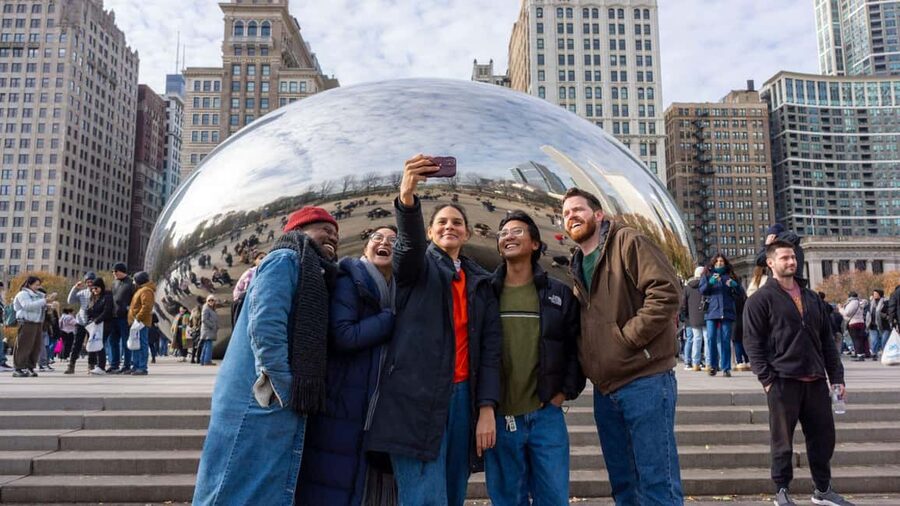
Cloud Gate, the reflective sculpture widely called The Bean, is another major stop. Its curved stainless-steel surface catches the skyline and the people around it, turning a simple photograph into a reflection of the city itself. It is a popular place to pause, so expect other people nearby and allow a moment to take your picture.
A two-hour walking tour cannot give you unlimited park time. If you want to sit, explore every artwork, or take a slow series of photos, plan to return on your own. The tour’s value is in introducing the park and explaining why these works belong in Chicago’s public life.
More architecture tours around Chicago:
- Chicago Architecture River Cruise
★ 5.0 · 15,756 reviews - Chicago River 90-Minute Architecture Tour
★ 4.5 · 9,629 reviews - Chicago River: 1.5-Hour Guided Architecture Cruise
★ 4.8 · 8,046 reviews - Chicago Architecture Center River Cruise aboard First Lady
★ 5.0 · 5,536 reviews
The Great Fire and the city that rebuilt
As you move among the Loop’s landmarks, the guide connects present-day streets with the Great Fire of 1871 and the rebuilding that followed. That context helps explain why Chicago is so often associated with ambitious engineering and architecture. The city’s built environment is not a single period frozen in place; it reflects repeated change and reinvention.
The route makes this history visible through buildings and public spaces rather than relying only on dates. You can see how older landmarks sit alongside newer towers and how the city’s identity is expressed through both practical infrastructure and art.
This is a broad introduction, not a detailed history seminar. If you want a deeper account of the fire or Chicago’s architectural development, use the tour as a starting point and follow up with a museum visit or an architecture-focused river cruise.
The L, Route 66, and a city built for movement
The elevated trains give the Loop its name, and a look at the L offers a useful pause from the focus on facades and sculpture. The trains are an enduring sign of urban life in Chicago, and the guide explains their place in the city’s transportation system.
The tour also visits the downtown marker for the start of Route 66. The famous road trip route begins here and runs all the way to California. It is a small sign with a large story attached, and a good example of how Chicago’s identity reaches beyond its downtown streets.
These stops give the walk some range. You are not only seeing buildings as objects; you are also looking at how people move through the city and how Chicago became a starting point for journeys across the country.
The Art Institute and what this walk can cover
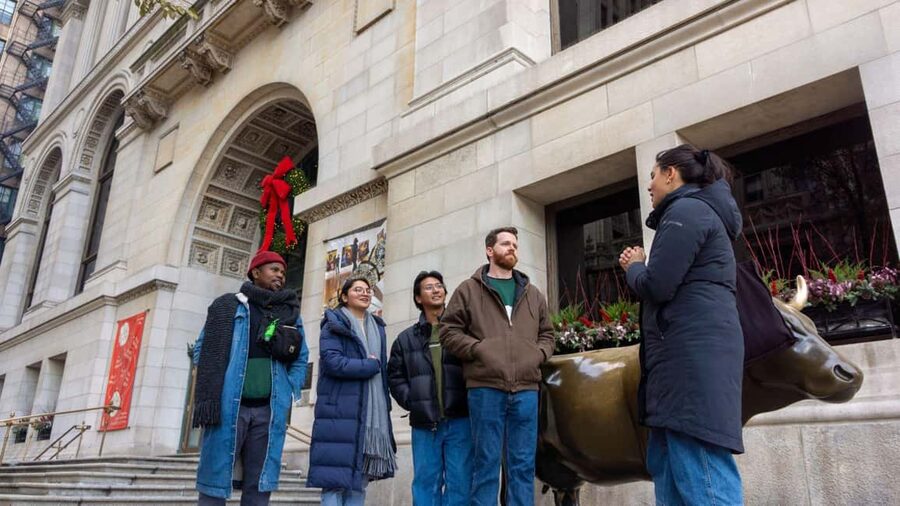
The route reaches the Art Institute of Chicago, one of the city’s best-known cultural institutions and home to a major collection of paintings, sculptures, and cultural objects. The tour introduces the institution as part of the Loop’s cultural center, but the two-hour walk is not an Art Institute visit.
That distinction matters when planning your day. If you want to see the collection, set aside separate time to go inside. The walking tour helps place the museum in its downtown setting and gives you a sense of how the city’s cultural landmarks relate to Millennium Park and the surrounding streets.
The Art Institute stop also makes the tour a useful first activity. After hearing the guide’s overview, you can decide which places deserve a longer return visit rather than trying to fit every major attraction into one morning.
Weather, pacing, and the two-hour format
The tour is designed to adjust to Chicago weather. In warmer conditions, you spend more time among Millennium Park’s outdoor works. In winter, or when rain makes the walk less comfortable, the guide balances time outside with stops in public buildings and lobbies where you can warm up and look around.
That flexibility is a real plus for a city where the weather can shape the day. It does not mean the walk becomes entirely indoors in poor conditions, so bring clothing suited to the forecast. Even on a mild day, expect to be on your feet and moving between outdoor stops.
The tour is offered in the morning and afternoon, lasts two hours, and is conducted in English. The pace has been described as comfortable, with enough time to hear stories and take in the main sights without turning the walk into a race. Still, this is an overview. If a particular building or artwork catches your eye, you may want to return after the tour.
Is $49 a fair price?
At $49 per person, the main value is the guide’s local commentary and the structure of the route. The Loop’s sights are mostly public-facing, so you are not paying for admission to a set of attractions. You are paying for two hours of explanation, a clear route through a dense part of downtown, and help noticing details you might otherwise walk past.
I think that is a reasonable choice if you enjoy architecture, city history, and public art but do not want to research every stop yourself. The guide can tie together the department-store landmark, Tiffany glass, modern sculpture, transit, and the Great Fire in a way that makes the district easier to read.
It is less compelling if you prefer to explore at your own pace or want extended time inside museums. Gratuity is not included, so factor that in if you plan to tip. The tour also offers free cancellation up to 24 hours in advance and a reserve-now, pay-later option, which can help if your schedule is still taking shape.
Who should book this walk?
I would put this tour near the start of a Chicago visit. It gives you a compact orientation to the Loop and points out places worth revisiting, especially Millennium Park and the Art Institute. It is also a good fit if you like hearing a local explain the city through anecdotes and architectural details rather than studying a map alone.
The route suits visitors who want a mix of history, buildings, and art without committing a full day. It can work well in winter, too, because the guide can use indoor stops to break up time outside. If cold weather is a concern, dress for the walk anyway; the indoor visits are a useful buffer, not a guarantee that you will stay inside.
Choose another experience if your priority is a long, technical account of Chicago architecture or a full museum visit. A river architecture cruise is a natural next step for a different view of the skyline, while this walk is strongest at street level, where the Loop’s public spaces and everyday details come into focus.
Should you book the Chicago Loop walk?
Book it if you want a well-paced introduction to downtown Chicago, with a local guide to connect landmarks that can seem unrelated at first glance. The combination of Tiffany glass, public art, park space, transit, and city history gives the two hours a useful variety.
Skip it if you would rather spend those two hours inside the Art Institute or wandering without a set route. For most first-time visitors, though, this is a practical way to get oriented and find the places you may want to explore more fully.
FAQ
How long is the Chicago Loop tour?
The walking tour lasts two hours.
Where does the tour start?
Meet your guide in front of the Chicago Theatre at 175 N. State Street, at the corner of State and Lake.
What language is the tour conducted in?
The live tour guide speaks English.
What places are included on the route?
Stops and sights include the former Marshall Field’s, now Macy’s on State Street, the Picasso in Daley Plaza, Millennium Park, Crown Fountain, the L, the Route 66 start marker, the Art Institute of Chicago, and Cloud Gate, known as The Bean.
Does the tour go inside buildings?
The tour includes visits to some of Chicago’s public buildings and lobbies. Indoor stops may be used to adapt the route to cold or rainy weather.
Does the route change with the season?
Yes. In warmer weather, the tour spends more time in Millennium Park. In winter, it balances outdoor viewing with time inside public buildings and lobbies.
Is admission to the Art Institute included?
The tour reaches the Art Institute, but the provided activity details do not specify museum admission or an interior visit. Plan separate time if you want to see its collection.
What is included in the $49 price?
The price is $49 per person and includes a professional local guide and live commentary. Gratuity is not included.
Can I cancel or pay later?
You can cancel up to 24 hours in advance for a full refund. A reserve-now, pay-later option is also available.
Just added around Chicago
- Travel between Chicago O’Hare and Madison★ 4.5 · 4 reviews
- Verse Immersive Holographic Theater in Chicago★ 4.5 · 28 reviews
- Walking Tour: Historic Chicago Pubs in River North and the Loop★ 5.0 · 9 reviews
- Professional Photo Shoot in Chicago★ 4.5 · 8 reviews
- Private Transfer from Chicago Airport (ORD)★ 3.5 · 3 reviews
- The Devil in the White City: A Haunting History Tour★ 4.5 · 17 reviews
- 2 Hour Chicago Landmarks & Lakefront E-Bike Tour★ 5.0 · 4 reviews
- Chicago Scavenger Hunt Adventure★ 5.0 · 5 reviews
Chicago Architecture Tours, compared.
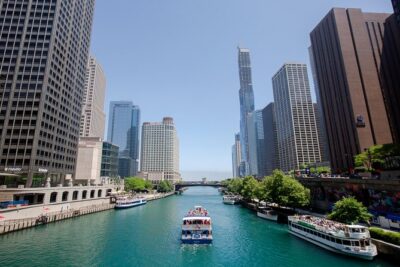
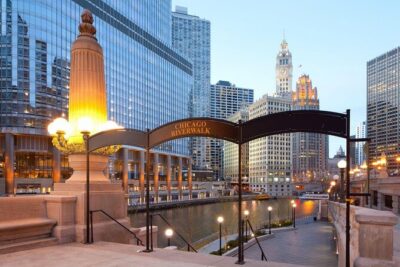
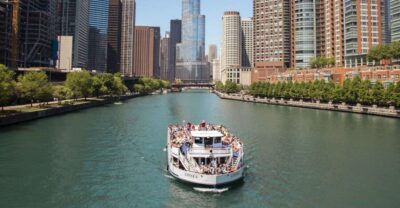
Chicago River: 1.5-Hour Guided Architecture Cruise
Read our review →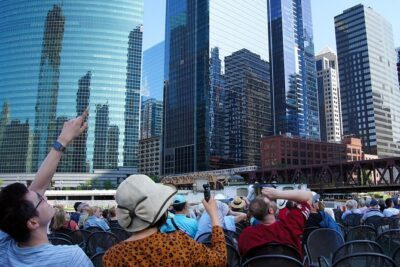
Chicago Architecture Center River Cruise aboard First Lady
Read our review →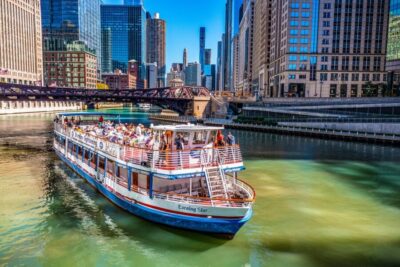
Architecture River Cruise Skip-the-Ticket Line
Read our review →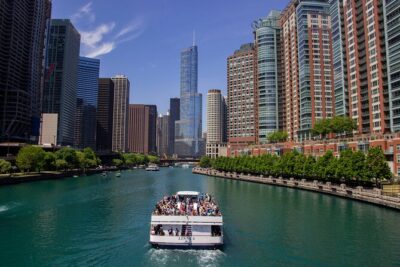
Chicago River 45-Minute Architecture Tour from Magnificent Mile
Read our review →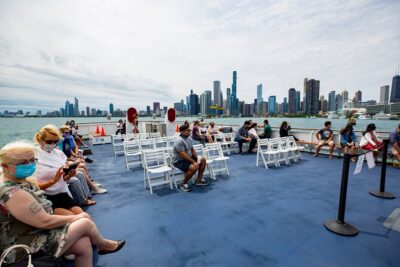

45-Minute Family-Friendly Architecture River Cruise
Read our review →Browse the lists this tour appears in