
Reviewed · CHICAGO ARCHITECTURE TOURS
Explore Chicago’s Hidden Past: Prohibition Culture & Architecture
Chicago’s Prohibition-era story is one thread in a walk through the Loop’s grand buildings, public art, underground passages, and river views. You start beneath the Chicago Theatre marquee and finish at Cloud Gate, better known as the Bean, with a guide to help connect the city’s landmarks to the history around them.
I like the mix of famous sights and less obvious stops, especially the chance to step inside the Chicago Cultural Center and, if weather allows, explore part of the Pedway. I also like that the small-group format leaves room for questions, while a little Chicago-style popcorn adds a welcome snack.
One thing to know: the tour covers about three miles in two and a half hours, and its Prohibition focus may be lighter than the name suggests. Expect a broad city and architecture walk, not a dedicated tour of speakeasies or Prohibition sites.
- The route links major Loop sights: Start at the Chicago Theatre, pass City Hall and Daley Plaza, then follow the river to Michigan Avenue and Millennium Park.
- The Pedway is weather dependent: This underground tunnel network offers a glimpse of how locals move through downtown, but it may not be part of your route.
- The Cultural Center is a key indoor stop: You’ll get time to see the former library’s public rooms and decorative details.
- Architecture is the main event: The Wrigley Building, Tribune Tower, Marina City, and other landmarks give the guide plenty to point out.
- The tour ends at the Bean: Your guide can offer suggestions for nearby sights, lunch, or a drink.
- It’s a good first-day orientation: You’ll get a compact introduction to downtown, plus tips for what to explore next.
A city story that starts under the Chicago Theatre marquee
The Chicago Theatre is a fitting meeting point: its famous marquee gives you an immediate sense of the city’s show-business swagger. The tour begins here, at 175 N State Street, then sets off through the Loop with a local English-speaking guide.
The experience combines architecture, civic history, public art, and stories about Chicago in the 1920s. That mix is useful if you want more than a list of buildings, but it also means the Prohibition theme is not the whole program. The route does not list a speakeasy visit or a specific Prohibition-era interior. Instead, your guide frames the city’s development through the sights along the way.
Guides named in tour feedback include Rich, Dave, Dash, and Kevin. The guide assigned to your departure may be someone else, but the strongest part of the experience is the chance to ask questions as you walk. Several accounts describe guides who share anecdotes, show photos, and adjust their pace or discussion to suit the group. If you have a particular interest, ask about it early. A private tour may allow more room to tailor the route.
The Pedway offers a glimpse below street level
The first unusual stop is the Chicago Pedway, a system of underground tunnels used by downtown residents and commuters. If conditions allow, you’ll spend about 20 minutes exploring a section of it. The tunnels are practical rather than grand, but they reveal another side of city life: Chicago’s downtown has routes and routines that aren’t obvious from the sidewalk.
This stop is weather dependent, so don’t treat it as guaranteed. The tour runs in rain, shine, or snow, and the guide may adjust the walk to conditions. Dress for the forecast and wear comfortable shoes. The Pedway is one of the tour’s more distinctive stops, but the buildings and riverfront remain the core of the experience if it is skipped.
You’ll also pass the City Hall-County Building, a working center of city and county government. It’s a useful reminder that the Loop is not just a collection of historic facades and visitor sights. People still come here to work, commute, and manage the daily business of a major city.
More architecture tours around Chicago:
- Chicago Architecture River Cruise
★ 5.0 · 15,756 reviews - Chicago River 90-Minute Architecture Tour
★ 4.5 · 9,629 reviews - Chicago River: 1.5-Hour Guided Architecture Cruise
★ 4.8 · 8,046 reviews
Daley Plaza puts public art in the middle of civic life
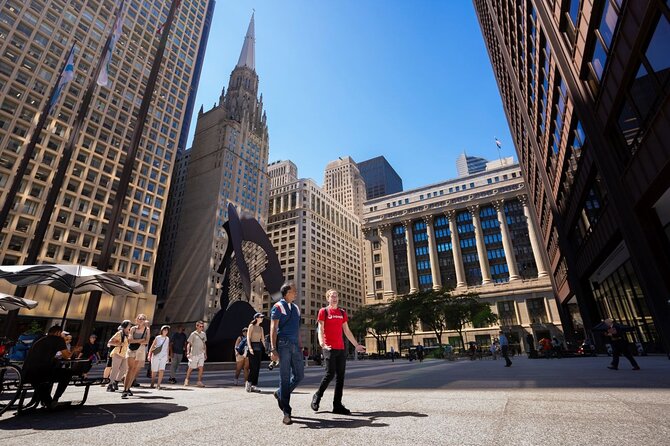
At Daley Plaza, you’ll stop by the Chicago Picasso, a large 1967 sculpture that helped change expectations for public art in the city. The stop lasts about 10 minutes. Your guide can explain how a bold modern artwork became part of an everyday civic space, where people cross the plaza on their way to work or pause between errands.
This is a brief visit, not a gallery tour, but it offers a sharp contrast with the older architecture nearby. Chicago’s public spaces often place different eras side by side: traditional stone buildings, modern sculpture, and busy streets. The Picasso is also an easy landmark to find later if you want to return on your own.
The Chicago River gives the walk its best skyline angle
The route then reaches the Chicago River, where you’ll spend around 20 minutes walking near one of the city’s defining arteries. The river is more than a scenic backdrop. It helps explain how Chicago grew and why the downtown skyline gathers so dramatically around the water.
From here, the architecture becomes easier to read as a group rather than as isolated buildings. You’ll see how towers face the river, how bridges and streets frame views, and how the city’s busy daily movement fits around its older structures. Your guide may share details that are easy to miss when you’re simply hurrying along the sidewalk.
This is a walking tour, not a boat cruise, so you won’t cover the river’s full length or see the skyline from the water. If a river cruise is high on your list, this experience does not replace it. The advantage here is the close-up view and the chance to stop for explanations as the city unfolds around you.
The Riverwalk connects Marina City, Wrigley, and Tribune Tower
Weather permitting, the tour continues along the Chicago Riverwalk for about 20 minutes. This is one of the most scenic sections, with views of Marina City, the Wrigley Building, and Tribune Tower. The route lets you see these landmarks from different angles, rather than only from across a busy avenue.
The Wrigley Building is a historic marker on North Michigan Avenue, while Tribune Tower rises nearby in a striking neo-Gothic style. Its 463-foot height and 36 stories make it a strong presence on the street, but the guide’s explanation can help you notice the design details as well as the scale. The included architectural stops also mention the Jewelers Building and London House, though the exact amount of time spent at each may vary.
You’ll pass the Magnificent Mile, the well-known stretch of North Michigan Avenue lined with shops, restaurants, and attractions. Its development was tied to the 1909 Burnham Plan, a city plan that shaped how Chicago grew. The avenue is lively and easy to explore after the tour, but during the walk the focus is on its place in the city’s design and history, not on shopping.
The route covers several famous facades, but don’t expect long visits inside each one. This is a paced city walk, and much of the architecture is viewed from outside. If you want a specialist discussion of architects, structural methods, or design movements, ask your guide for more detail; the tour’s appeal is its mix of accessible context and broad city coverage.
More Chicago tours and tickets around Chicago:
- Chicago: Gangsters and Ghosts Walking Tour
★ 5.0 · 7,155 reviews - Chicago Architecture Center River Cruise aboard First Lady
★ 5.0 · 5,536 reviews - Chicago: Willis Tower Skydeck and The Ledge Ticket
★ 4.6 · 4,350 reviews - Chicago: Architecture River Cruise Skip-the-Ticket Line
★ 4.8 · 4,325 reviews
The Cultural Center rewards a look inside
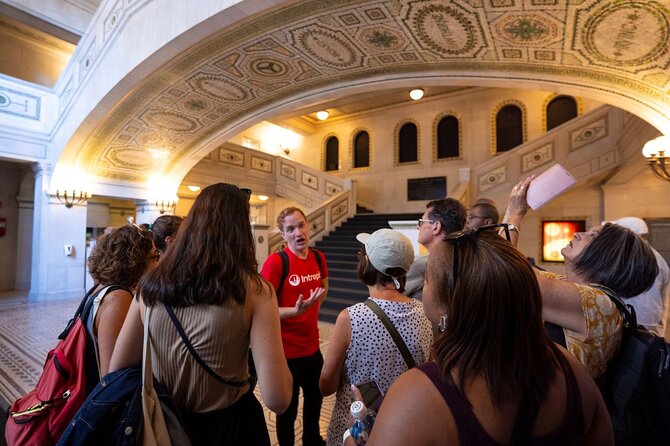
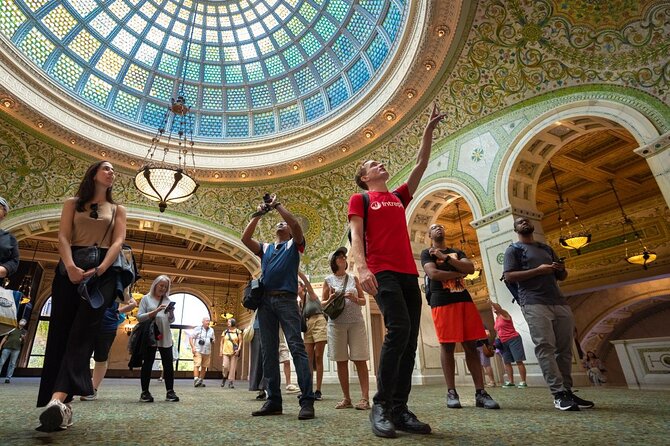
The Chicago Cultural Center is the tour’s main indoor architectural stop. You’ll spend about 15 minutes inside this Chicago landmark, a former library where the mayor has welcomed presidents, royalty, and other dignitaries. It is also a chance to step away from the street and look up at the building’s decorative interiors.
This stop is often a highlight for people who enjoy architecture beyond the skyline. The former library’s rooms offer details you can miss from the sidewalk, and the visit gives the route a useful change of pace. One guide may spend more time explaining the building’s history and design than another, so ask questions if a particular feature catches your eye.
The timing is brief, so think of it as an introduction rather than a full building tour. If you want a longer visit, you can return later on your own. The Cultural Center is also a good example of why a guided walk can add value: a quick glance inside becomes more meaningful when you know what the building once was and how it has been used.
Millennium Park and Cloud Gate make a strong finish

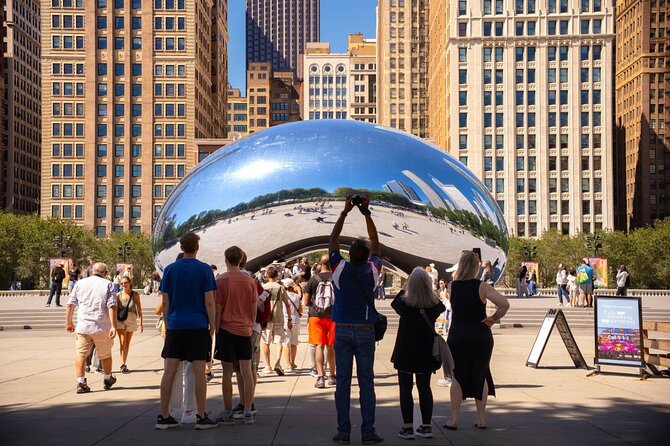
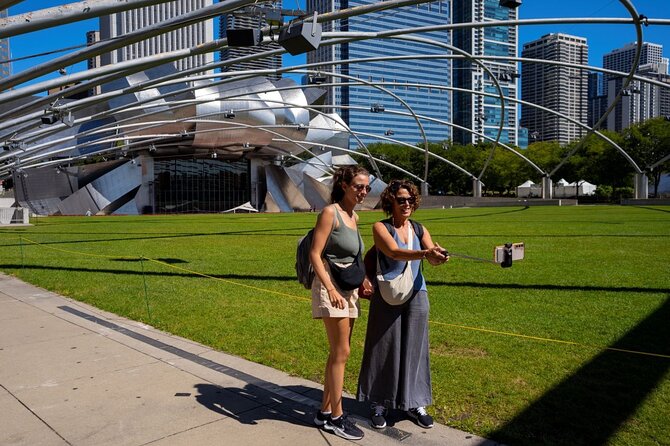
The tour ends in Millennium Park, with about 20 minutes to explore before a final 10-minute stop at Cloud Gate, the polished sculpture known as the Bean. You’ll have time for the iconic reflective photo, though the park can be busy and the sculpture’s surface tends to show plenty of fellow visitors along with the skyline.
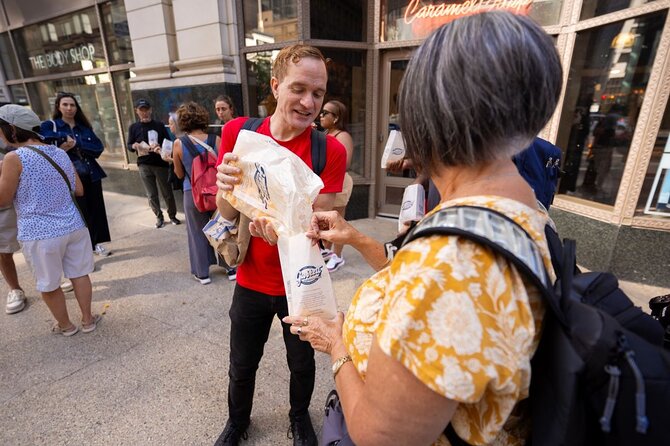
Ending here is practical. You’re close to other downtown sights, and the guide can suggest nearby places to eat, have a drink, or continue sightseeing. The tour does not include a meal, but Chicago-style popcorn is provided along the way. Any additional food or drink is at your own expense.
The Bean is familiar from photographs, but seeing its curved surface reflect the surrounding buildings gives it a different character. If you’re visiting Millennium Park anyway, having the guide finish here also helps you get oriented before deciding what to do next.
What the Prohibition theme does, and doesn’t, promise
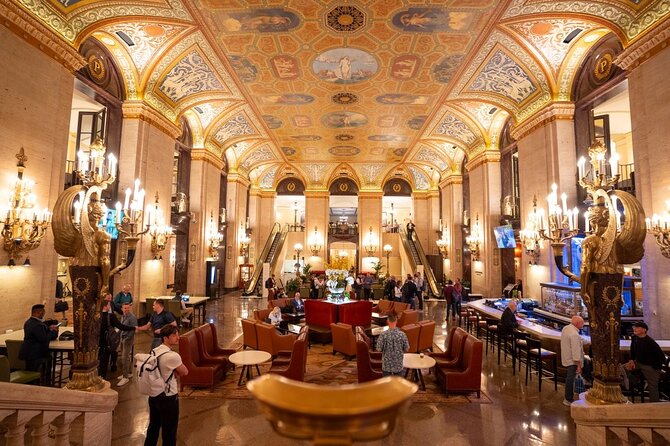
The tour presents Chicago’s Prohibition era as part of a wider story about the city and its architecture. You’ll hear about the influence of the 1920s, but the route is built around landmarks, public spaces, and the city’s development. The balance may suit you if you want a broad introduction with historical anecdotes rather than a tightly focused account of illegal bars and liquor culture.
That distinction matters. Some tour descriptions can make a theme sound more specialized than the actual route. Here, the listed stops include civic buildings, the river, famous towers, the Cultural Center, and Millennium Park. There are no named speakeasies or Prohibition-era venues on the route, so book it primarily for the Loop walk and its architecture, with the 1920s as an added layer.
The tour’s strongest value is the guide’s interpretation. The city’s buildings are easy to admire from a distance, but a guide can connect them to civic history, urban planning, and everyday life. The experience works best when you’re curious and willing to ask questions, rather than expecting a lecture devoted to a single topic.
Three miles of walking for a useful downtown overview
At about 2.5 hours and 4.8 kilometers, or three miles, this is a manageable but substantial walk. Most fitness levels can participate, and the tour is described as suitable for all ages. Still, you’ll be on your feet for much of the time, and the route takes place outdoors in Chicago weather. Dress accordingly, including for rain, snow, or cold conditions.
The group is small, with a stated maximum of 15 people in the additional tour details. A small group makes it easier to hear the guide, ask questions, and keep the walk conversational. The tour can also be booked as a private experience, which may suit you if you want more attention or have a particular interest to discuss.
Children under six join free, while children ages six to 11 pay the adult rate. The tour allows service animals and is near public transportation. The start is at the Chicago Theatre, and the finish is Millennium Park, so plan to meet at the theatre and arrange your next stop from the park.
The price is $49.96 per person. That’s reasonable if you value a local guide, a route that covers several major downtown landmarks, a brief interior visit, and practical advice for the rest of your stay. It is less compelling if you mainly want a detailed architectural seminar or a dedicated Prohibition tour. The popcorn is a pleasant extra, not the main reason to book.
The tour averages 20 days of advance booking, so popular dates may need planning. You can cancel for a full refund up to 24 hours before the start time; cancellations within 24 hours are not refunded.
Who should book this Chicago walk
I’d choose this tour early in a Chicago visit, especially if you have limited time downtown. It gives you a route through key sights, a first look at the river and the Magnificent Mile, and useful suggestions for what to do after the walk. It also works well for visitors who enjoy hearing a guide’s stories and want a balance of architecture, public art, and city history.
It is a less suitable choice if you’re seeking an intensive study of Chicago’s architects or a route centered on speakeasies and Prohibition. For those interests, ask before booking how much of the tour’s time is devoted to your preferred subject. If you’re happy with a broad Loop introduction and a few memorable stops, this walk offers a practical way to see the city with context, rather than simply passing its landmarks on your own.
FAQ
How long is the tour?
The tour lasts approximately two hours and 30 minutes.
How much walking does it involve?
The route covers about 4.8 kilometers, or three miles.
Where does the tour start and end?
It starts at the Chicago Theatre, 175 N State Street, and ends in Millennium Park at the Bean.
Is the Chicago Pedway visit guaranteed?
No. The Pedway stop is weather dependent.
Is Chicago-style popcorn included?
Yes. Chicago-style popcorn is included. Additional food and drink are not.
Is the tour focused only on Prohibition?
No. Prohibition-era Chicago is one part of a broader walk covering architecture, public art, civic history, and downtown landmarks.
Can children join?
Yes. The tour is described as child-friendly. Children under six join for free, and children ages six to 11 pay the adult rate.
What is the cancellation deadline?
You can cancel at least 24 hours before the start time for a full refund. Cancellations made less than 24 hours before the start time are not refunded.
Just added around Chicago
- Travel between Chicago O’Hare and Madison★ 4.5 · 4 reviews
- Walking Tour: Historic Chicago Pubs in River North and the Loop★ 5.0 · 9 reviews
- Verse Immersive Holographic Theater in Chicago★ 4.5 · 28 reviews
- Private Transfer from Chicago Airport (ORD)★ 3.5 · 3 reviews
- Professional Photo Shoot in Chicago★ 4.5 · 8 reviews
- The Devil in the White City: A Haunting History Tour★ 4.5 · 17 reviews
- 2 Hour Chicago Landmarks & Lakefront E-Bike Tour★ 5.0 · 4 reviews
- Chicago Scavenger Hunt Adventure★ 5.0 · 5 reviews
Chicago Architecture Tours, compared.
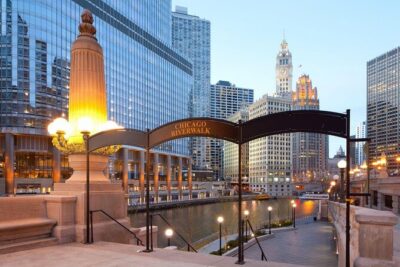
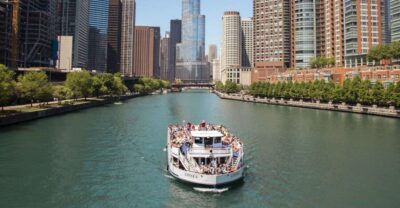
Chicago River: 1.5-Hour Guided Architecture Cruise
Read our review →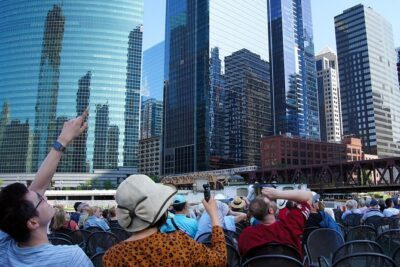
Chicago Architecture Center River Cruise aboard First Lady
Read our review →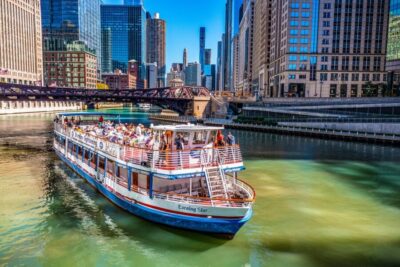
Architecture River Cruise Skip-the-Ticket Line
Read our review →
Chicago River 45-Minute Architecture Tour from Magnificent Mile
Read our review →
45-Minute Family-Friendly Architecture River Cruise
Read our review →Browse the lists this tour appears in