
Reviewed · CHICAGO MUSEUM TICKETS
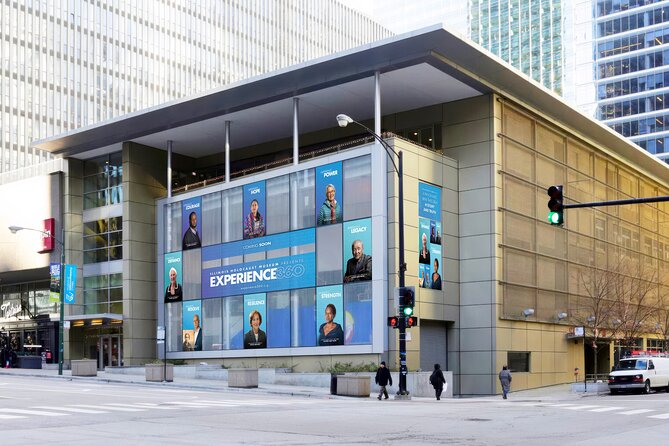
Illinois Holocaust Museum Experience360 Admission
The most striking part of Experience360 is how it connects history to individual lives. You move from an overview of the Holocaust and World War II to a VR journey through places survivors knew, then encounter personal objects and testimonies. The technology is there to bring human stories closer, not to turn a museum visit into a thrill ride.
I like two things in particular: the VR theater and hologram conversations offer distinct ways to hear survivor accounts, and staff are available to answer questions as you go. The museum also places the Holocaust in a wider context, including information about other genocides.
One consideration is the emotional weight. This is a sobering visit, not a quick entertainment stop, and the museum does not recommend it for children under 12. Give yourself time to pause, especially if you want to see every exhibition.
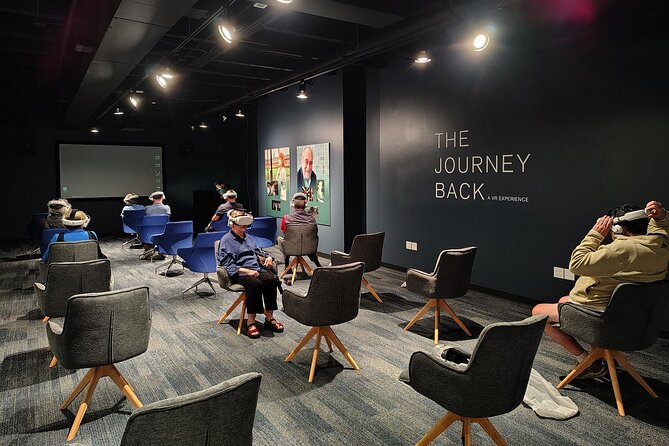
- VR follows survivors through familiar places: The theater visits childhood hometowns and places of hiding.
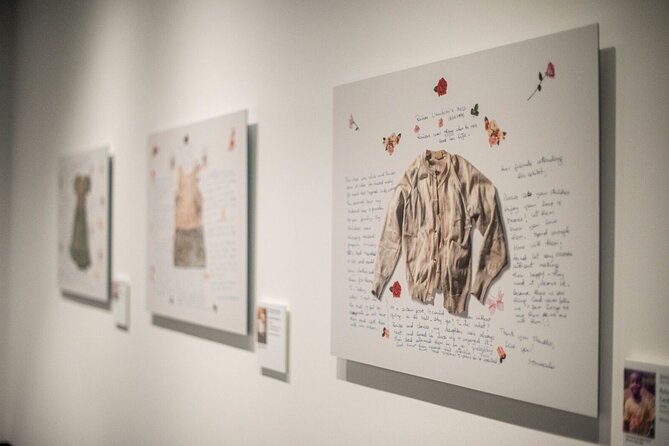
- Objects carry personal meaning: The Stories of Survival exhibition pairs artifacts with images and written testimony.
- Holograms invite questions: Interactive survivor conversations let you ask questions and hear recorded responses.
- The galleries extend beyond one historical subject: The museum includes information about multiple genocides.
- Staff can add context: Tom, MJ and Val are among the staff members who have helped visitors with questions.
- Admission is $12: The ticket includes access to all museum exhibitions, with a typical visit lasting one to two hours.
Start with the reason the museum is in Skokie
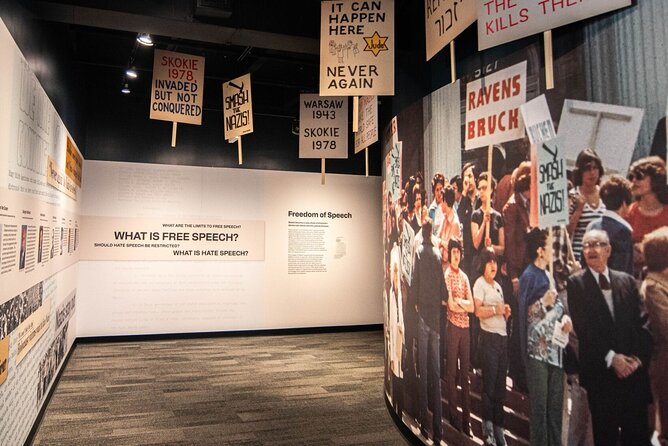
Experience360 begins in the Call-to-Action Gallery, which explains why a Holocaust museum was founded in Skokie. This opening gives you a useful frame before you enter the historical galleries: the museum is not only presenting the past, but asking what it means to remember it and respond to hatred and persecution.
That framing matters because the subject can feel enormous and abstract. Starting with the museum’s purpose gives you a question to carry through the visit: how do personal memory, public education and action relate to one another? You do not need to arrive with a specialist’s knowledge. The galleries are intended for visitors from different backgrounds, and staff can help fill in context.
The Call-to-Action Gallery is also a good place to settle into the pace of the museum. This is not a visit where you need to hurry from label to label. Take a moment to orient yourself, then move into the historical overview.
The Karkomi Foundation Gallery puts events in context
The Karkomi Foundation Gallery offers an overview of the Holocaust and World War II. It gives you the broad historical setting needed to understand the later, more personal exhibits. If your knowledge of the period is patchy, this is where the visit can help connect the names, events and consequences.
A broad overview is useful, but it can also be demanding. The subject covers a great deal of history, and there is no need to absorb every detail at once. Read at a pace that works for you, and use the opportunity to ask staff questions. The museum encourages questions throughout, which can be especially helpful when a fact or historical connection needs a little more explanation.
The galleries also address more than the Holocaust alone, with information about multiple genocides. That wider scope does not make the Holocaust less central to the museum’s purpose. Instead, it encourages you to consider how societies remember mass violence and what lessons can be drawn without treating different histories as interchangeable.
More museum tickets around Chicago:
- Medieval Torture Museum Ticket with Audio Guide and Ghost Hunting
★ 5.0 · 962 reviews - Chicago: Art Institute of Chicago Fast-Pass Ticket
★ 4.8 · 819 reviews - Chicago: Field Museum of Natural History Ticket or VIP Tour
★ 4.7 · 717 reviews
The VR theater makes place part of the story
In the Northern Trust Virtual Reality Theater, you accompany survivors through childhood hometowns and places where they hid. The change in perspective is the point: rather than encountering only dates and maps, you follow stories connected to real places and memories.
The VR format can make those accounts feel immediate. It also gives the visit a different rhythm from the galleries, where you choose how long to spend with each display. Here, you are following a more directed presentation. If you are curious about the technology, this is a central part of the ticket, and many people particularly value the virtual experience.
Still, VR is only one way into the history. It should not crowd out the exhibits around it. The objects, images and written testimony offer a quieter kind of attention, and together the different formats help keep the stories grounded in people’s lives rather than in technology alone.
If you have questions about what you have seen, ask staff. Tom, MJ and Val have been singled out for taking time to explain things and respond to questions. Staff conversations can add useful context, though the exact person you meet and the amount of time available may vary.
Objects and testimony give memory a human scale
The ITW Stories of Survival: Object. Image. Memory exhibition brings together personal artifacts, images and written testimonies. A small object can tell a story that a general timeline cannot. It gives you something specific to consider: an item once held, used or kept by a person whose life was changed by events on a vast scale.
This gallery is likely to be a quieter stop, but not necessarily an easier one. Personal belongings and written accounts can make the history feel close, and the subject matter is deeply affecting. Some displays may stay with you longer than the amount of time you spend in front of them.
I would not plan this as a race through the museum. The stated visit length is about one to two hours, but your pace depends on how much you read, watch and discuss. If you have only a lunch break, you may have to leave some exhibits for another visit. The museum is larger than some people expect, so a return trip can make sense if you want to give each section proper attention.
Hologram conversations invite you to ask
The interactive hologram exhibit lets you have a conversation with Holocaust Survivors through recorded responses. The format is unusual: instead of simply watching a film, you can ask questions and hear the survivor answer through the technology.
This is one of the most distinctive parts of Experience360, and it rewards curiosity. You do not need to arrive with a prepared list, but it is worth asking rather than standing back uncertainly. The exhibit is designed for questions, and the exchange can help make an individual story feel less distant.
The holograms are not the same as speaking with a survivor in person. They are a technological way to preserve and share testimony, and that distinction is worth keeping in mind. The value lies in hearing a person’s account and being able to engage with it, while recognizing that the interaction is mediated.
Personal conversations with staff can add another human dimension. Michael, a second-generation Holocaust survivor, has shared his parents’ story in conversation with visitors. You should not count on meeting a particular staff member, but the museum’s emphasis on personal testimony carries beyond the screens and displays.
More Chicago tours and tickets around Chicago:
- Chicago Architecture River Cruise
★ 5.0 · 15,756 reviews - Chicago River 90-Minute Architecture Tour
★ 4.5 · 9,629 reviews - Chicago River: 1.5-Hour Guided Architecture Cruise
★ 4.8 · 8,046 reviews - Chicago: Gangsters and Ghosts Walking Tour
★ 5.0 · 7,155 reviews
Plan for an emotional, flexible visit
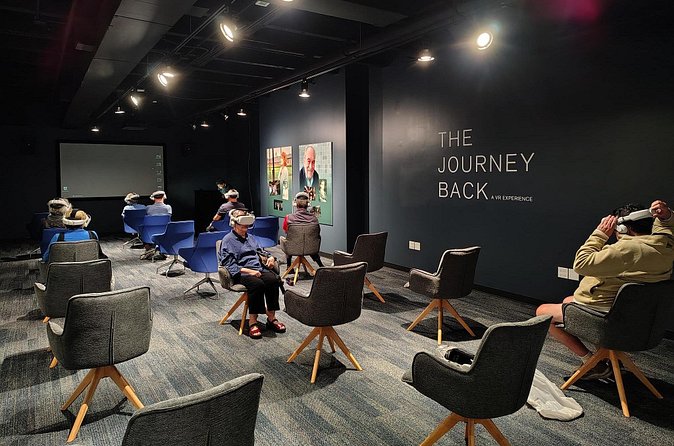
One to two hours is a sensible estimate, not a fixed route. If you move briskly through the overview and spend limited time with each display, you may finish closer to the shorter end. If you watch the VR presentation, explore the objects and testimonies, use the hologram exhibit and ask questions, allow more time.
The emotional tone is serious throughout. The museum is described as moving and heartbreaking, and the personal accounts can leave you quiet. If you are visiting with someone, leave space to talk afterward rather than scheduling the museum between two rushed activities. A tissue or two is a practical addition, not an overreaction.
The museum is not recommended for children under 12. That guidance reflects the subject matter and intensity, so consider the child’s age and readiness rather than treating admission as a standard family outing. Most travelers can participate, and service animals are allowed.
The museum is near public transportation, which is useful if you are coming from elsewhere in the Chicago area. The supplied details do not name a specific route or station, so check your own route before setting out. Opening hours are listed as 10 a.m. to 5 p.m. daily from August 26, 2025, through February 16, 2027. Confirm current hours when planning a visit outside that period.
Is $12 good value?
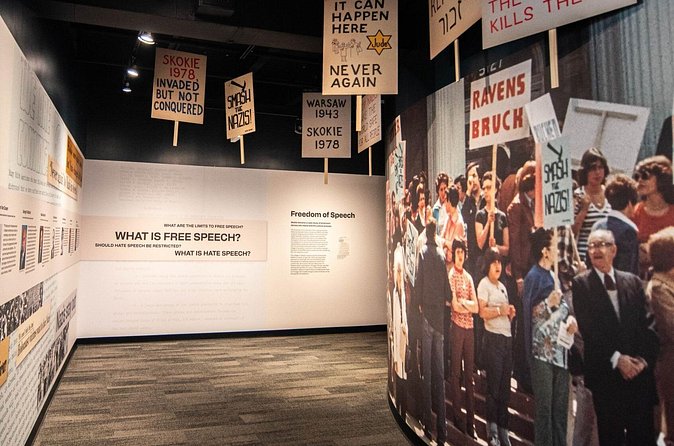
At $12 per person, admission includes access to all the museum’s exhibitions, including the VR theater and the hologram experience. That is a fair price for a visit that combines historical galleries, personal artifacts, testimony and interactive technology. You are paying for more than a single presentation, and the range of formats can make the history accessible to people who learn in different ways.
The value depends on how much time you can give it. If you have only a short window, you might not see everything, which can make the visit feel compressed. If you can set aside the full one to two hours and engage with the exhibits, the price is easier to justify. The museum’s staff presence is another practical benefit: you can ask questions instead of relying only on wall text.
Tickets are mobile, and confirmation is received when you book. The experience is booked an average of 15 days in advance, so planning ahead is sensible, though that average does not establish that every date sells out. Free cancellation is available up to 24 hours before the start time. Cancellations within 24 hours are not refunded, and changes during that period are not accepted.
Who will get the most from Experience360?
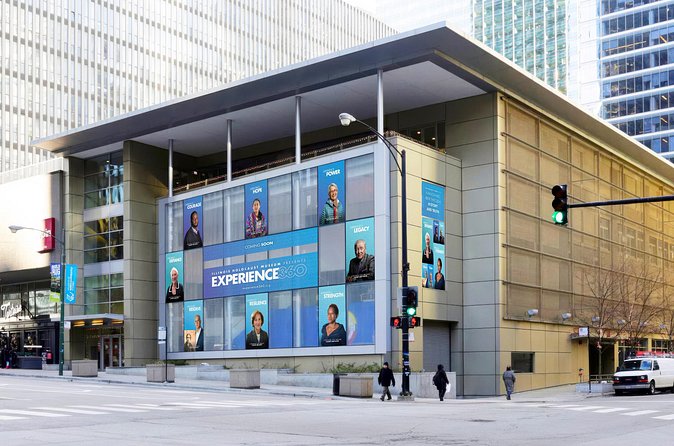
This visit suits history lovers, students of the Holocaust and World War II, and anyone interested in how museums preserve personal testimony. It also works for people who want a more interactive format than a traditional gallery alone. The combination of VR, artifacts, written accounts and hologram conversations gives you several ways to approach the subject.
It is a particularly good fit if you like to ask questions. Staff are present throughout, and the hologram exhibit is built around visitor questions. You do not need to arrive as an expert. A willingness to listen, pause and think is more useful than a long list of background facts.
It may be less suitable if you want a light outing, have little time, or are bringing a child under 12. The emotional impact is part of the visit, and the content deserves attention. If that sounds like more than you want in one sitting, consider saving the museum for a day when you can give it room.
Should you book?
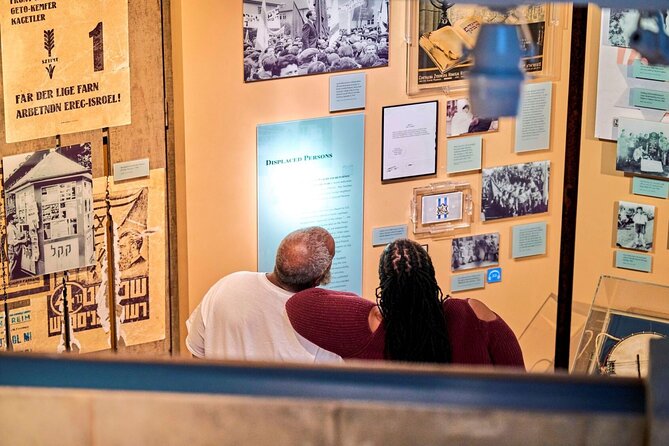
I would book Experience360 if you want a thoughtful, personal encounter with Holocaust history and can set aside at least an hour, preferably closer to two. The strongest reasons to go are the VR journeys through survivors’ places, the personal artifacts and the chance to ask questions through the hologram exhibit and with staff.
At $12, it offers solid value for access to all exhibitions. Go in ready to take your time, and do not expect the technology to make a difficult subject easy. It makes the stories more immediate, while the history itself remains sobering. If you are short on time, visiting in a return trip may be better than trying to see everything at a sprint.
FAQ
How much does Experience360 admission cost?
Admission is $12 per person.
How long should I plan to spend at the museum?
The approximate visit lasts one to two hours. Your actual time depends on how much you read, watch and discuss.
What does the ticket include?
The ticket includes access to all museum exhibitions, including the VR theater and the other Experience360 exhibits.
What can I expect in the VR theater?
The Northern Trust Virtual Reality Theater accompanies survivors through their childhood hometowns and places of hiding.
Is there an interactive hologram exhibit?
Yes. The museum offers interactive conversations with Holocaust Survivors through hologram technology, and you can ask questions.
What are the opening hours?
The listed hours are 10 a.m. to 5 p.m. daily, from August 26, 2025, through February 16, 2027.
Is the museum suitable for children?
The experience is not recommended for children under 12.
Are service animals allowed?
Yes. Service animals are allowed.
What is the cancellation policy?
You can cancel at least 24 hours before the experience’s start time for a full refund. Cancellations or changes made less than 24 hours in advance are not accepted for a refund or change.
Just added around Chicago
- Travel between Chicago O’Hare and Madison★ 4.5 · 4 reviews
- Walking Tour: Historic Chicago Pubs in River North and the Loop★ 5.0 · 9 reviews
- Verse Immersive Holographic Theater in Chicago★ 4.5 · 28 reviews
- Professional Photo Shoot in Chicago★ 4.5 · 8 reviews
- Private Transfer from Chicago Airport (ORD)★ 3.5 · 3 reviews
- The Devil in the White City: A Haunting History Tour★ 4.5 · 17 reviews
- The Deep Pockets Of Graceland Cemetery Walking Tour★ 5.0 · 9 reviews
- 2 Hour Chicago Landmarks & Lakefront E-Bike Tour★ 5.0 · 4 reviews
Chicago Museum Tickets, compared.
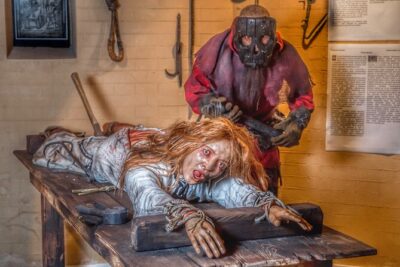
Medieval Torture Museum Ticket with Audio Guide and Ghost Hunting
Read our review →
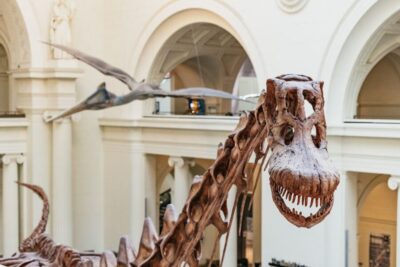
Field Museum of Natural History Ticket or VIP Tour
Read our review →
Field Museum of Natural History Admission Tickets
Read our review →
Skip-the-line: Art Institute of Chicago Guided Tour
Read our review →


2-Hour Chicago Lakefront & Museum Campus Segway Tour
Read our review →Browse the lists this tour appears in