
Reviewed · CHICAGO WALKING TOURS
Workers Cottages of Oldtown Triangle Walking Tour
Old Town’s workers’ cottages offer a rare look at the Chicago that existed before the Great Fire of 1871. On this walk, you’ll see dozens of them alongside grand Queen Anne rowhouses, a former farmhouse and St. Michael’s Church, with a guide connecting the buildings to the city’s early story.
I like two things in particular: the focus on ordinary homes, not just famous landmarks, and the small group limit of eight, which should leave room for questions. One consideration is that the posted stop timings do not clearly match the stated 1 hour 45 minute tour length, so check your confirmation for the expected finish time.
- 40 to 50 workers’ cottages: Compare the designs and spot rare stretches of these mid-1800s homes.
- A five-house Queen Anne and Second Empire row: See a striking group of homes on West Eugenie Street.
- St. Michael’s Church: Learn how this 1860s church became the tallest building in the United States for 16 years.
- A small walking group: The maximum of eight can make it easier to hear the guide and ask questions.
- A route through several eras: The walk includes an old farmhouse, notable residences, a neighborhood tavern and sites linked to Chicago’s early planning.
Old Town’s cottages make the city’s past visible
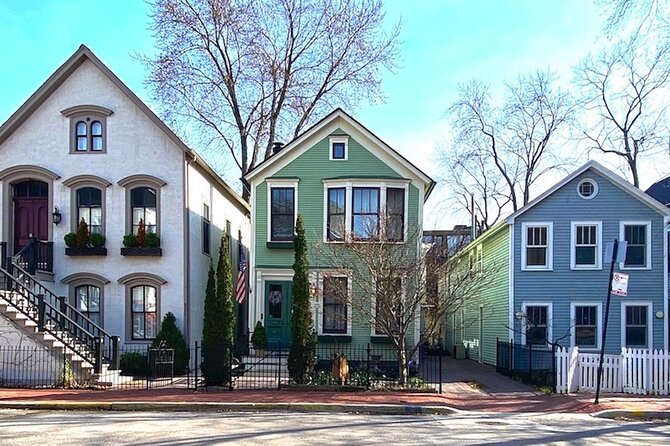
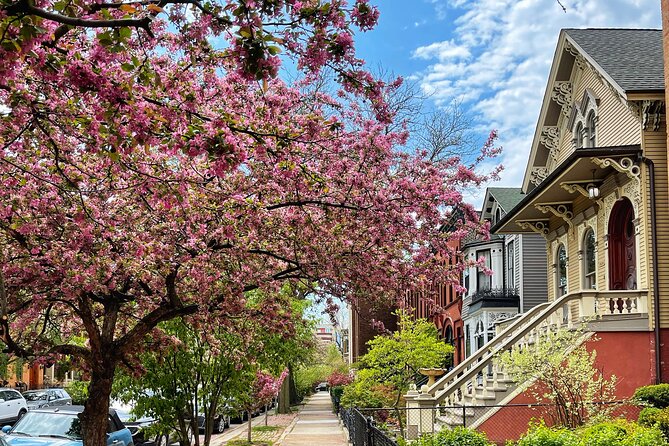
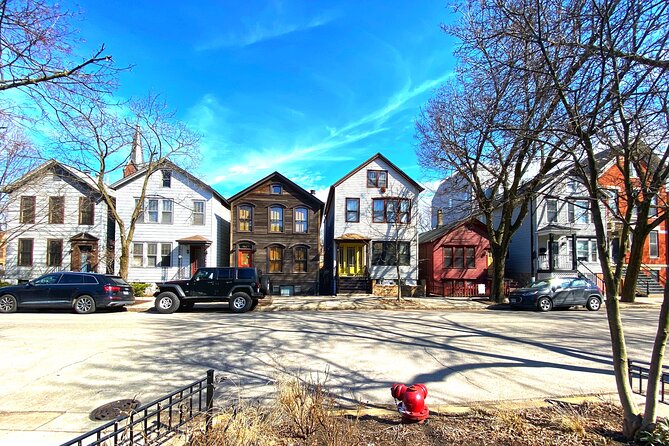
The appeal of this tour is easy to grasp once you imagine Chicago before its streets were lined with newer buildings. In the Old Town Triangle, many workers’ cottages from the mid-1800s remain, giving you a chance to see how ordinary city homes looked before the Great Fire of 1871. The tour points out 40 to 50 cottages and explains the different styles and building approaches.
I like that the subject is not limited to grand architecture. These cottages show the scale and character of everyday life in an earlier Chicago, while the less common stretches of houses in a row make the neighborhood’s survival especially clear. In one place, you can see an entire block with cottages on both sides of the street.
The tour also puts those modest homes in conversation with more elaborate architecture. Along the way, you’ll hear about well-known residents, historic properties and the people who helped shape Chicago. That range gives the walk texture: you are not only looking at façades, but also considering how a neighborhood changed as the city grew around it.
What the small group means on the street
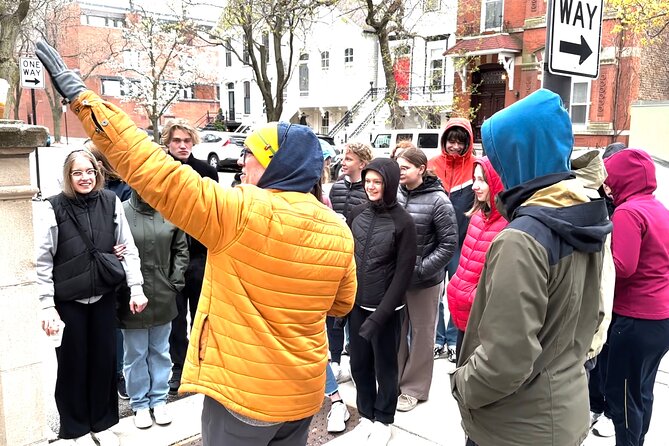
The group is limited to eight people. That is a useful size for a residential walking tour, where a guide may need to point out details in rooflines, façades and the changing styles of nearby houses. A small group also gives you a better chance to ask about a building that catches your eye, rather than simply keeping pace with a large crowd.
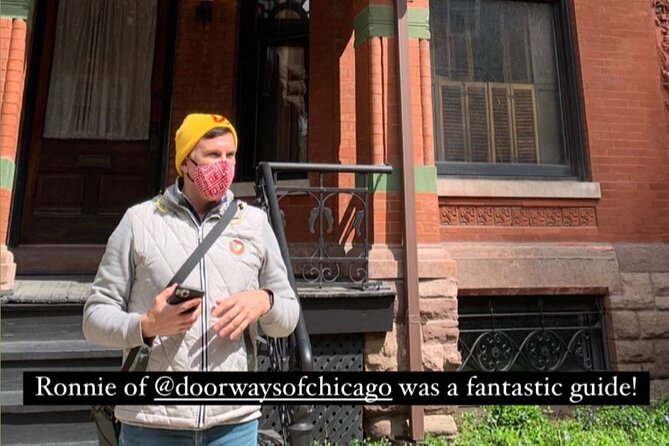
A past participant who lives in the neighborhood described joining to learn more about the houses they pass each day. That is a good clue to the tour’s appeal: you do not need to be an architecture specialist to enjoy it, and even local knowledge can leave room for new stories. Ronnie is named as a guide in that account, described as informative, passionate and professional. Guide assignments can vary, so do not assume Ronnie will lead your departure.
The experience is run by Tours by Doorways Of Chicago. It is a guided walk, not a museum visit, and the sights are the streets and buildings themselves. Bring your attention to the details, and be ready to spend much of the time outdoors.
More walking tours around Chicago:
- Chicago: Gangsters and Ghosts Walking Tour
★ 5.0 · 7,155 reviews - Chicago Favorites Ultimate Food and Walking Tour
★ 5.0 · 1,962 reviews - Chicago: Gangsters and Ghosts Guided Walking Tour
★ 4.7 · 1,697 reviews
Starting on West Eugenie Street
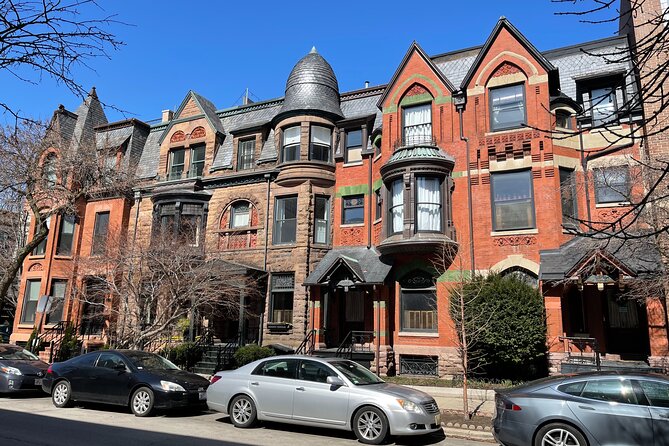
The tour begins at 164 W Eugenie St, a convenient starting point on a picturesque residential street. The listed start time is 11:00 am. You will meet the guide there, then set off on foot through the Old Town Triangle, ending a few short blocks from where you began.
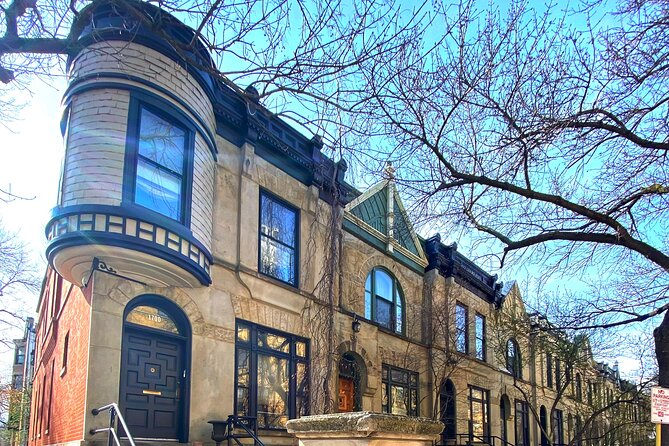
West Eugenie’s rowhouses are among the first architectural highlights. Designed by Harald Hansen and built in 1886, this unusual row of five homes combines Queen Anne and Second Empire styles. The contrast between the ornate houses and the simpler workers’ cottages helps make the neighborhood’s range of architecture clear.
The guide also uses this part of the walk to talk about Chicago’s beginnings, much of which unfolded in this area. That context matters: the tour is not simply a parade of attractive façades. The streets become a way to trace the city’s early growth, and you can see how homes from different periods sit within the same neighborhood.
Crilly Court and its notable residents
North Crilly Court brings the focus to the people who lived here, as well as the buildings themselves. You’ll hear about famous former residents and see a property designated as a National Landmark. The stop is a reminder that architectural history is often personal: a house can be memorable not only for its design, but for the lives connected to it.
The Old Town Triangle’s residential streets are a good setting for this kind of storytelling. You are close enough to see the homes at walking speed, and the small group limit should make it easier to follow explanations and ask for a closer look. Keep in mind that this is an outdoor neighborhood tour, so the experience depends on being comfortable walking between stops.
St. Michael’s Church and the city’s changing skyline
St. Michael’s Church, a Roman Catholic church built between 1866 and 1869, is one of the route’s biggest landmarks. It was the tallest building in the United States for 16 years, an eye-catching distinction that helps put the scale of early Chicago into perspective.
At roughly 20 minutes, this is one of the longer listed stops. You’ll have time to hear about the church and its place in the neighborhood’s story. The building also gives the tour a change of pace after several residential streets: here, the subject is not a cottage or a private home, but a major religious building with a striking place in the city’s architectural past.
More Chicago tours and tickets around Chicago:
- Chicago Architecture River Cruise
★ 5.0 · 15,756 reviews - Chicago River 90-Minute Architecture Tour
★ 4.5 · 9,629 reviews - Chicago River: 1.5-Hour Guided Architecture Cruise
★ 4.8 · 8,046 reviews - Chicago Architecture Center River Cruise aboard First Lady
★ 5.0 · 5,536 reviews
Twin Anchors and the neighborhood’s everyday life
The route includes Twin Anchors Restaurant & Tavern, founded in 1932 and known for its barbecued baby-back ribs. The tavern was a favorite of Frank Sinatra for many years, adding a bit of dining and entertainment history to a walk centered largely on homes and architecture.
This stop is listed for five minutes, so treat it as a quick look and a story, not a meal break. If you want to eat there, plan that separately rather than expecting the tour to include time for lunch. The restaurant adds a more recent layer to the neighborhood’s history, showing that Old Town’s appeal is not limited to the 19th century.
The Wacker homes and Louis Sullivan’s early work
The tour points out homes belonging to Charles and Frederick Wacker, father and son, whose work influenced the early design of Chicago. You’ll hear about their role in the city’s development while seeing the residences tied to their family. It is a compact stop, listed at five minutes, but it adds an urban-planning angle to the walk.
You’ll also see the Ann Halsted Rowhouses, designed by Louis Sullivan when he was in his early 20s, before he became widely known. That detail makes the stop especially interesting for anyone curious about how an architect’s early work compares with the reputation that came later. The tour gives you a chance to look closely at a youthful project in its original neighborhood setting.
A farmhouse at the end of the route
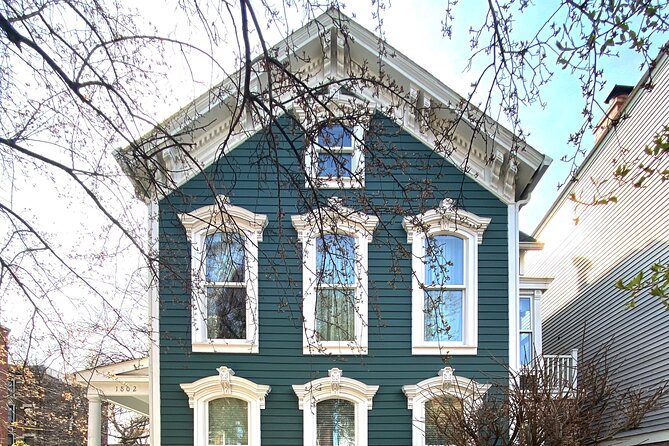
One of the walk’s most unusual sights is described as the only remaining farmhouse from the period when the Old Town area was still farmland outside Chicago’s city limits. It offers a sharp contrast with the cottages, rowhouses and church you’ve already seen. The building helps explain that this area did not begin as a dense urban neighborhood; the city’s edge once lay farther away.
The walk ends at 216 W Menomonee St, at what the guide describes as the first workers’ cottage they ever noticed, before learning what the cottages were. The endpoint is only a few short blocks from the starting point, which makes the route fairly convenient for returning to the beginning of the walk.
Is $45 a fair price for this walk?
At $45 per person, the value rests on the guide’s knowledge and the number of sites packed into a short neighborhood walk. You’ll see dozens of cottages, several distinctive rows of homes, a National Landmark property, St. Michael’s Church, a historic tavern and an old farmhouse. The group cap of eight is also a meaningful part of the price: you are paying for a guided experience with room to engage, not simply a route to follow on your own.
The tour is about 1 hour 45 minutes, or just under two hours, according to the stated duration. The stop descriptions include timings that do not neatly fit that overall length: the main Old Town Triangle stop is listed at two hours, with additional time estimates for later stops. Treat the duration as approximate and check your confirmation for the most useful schedule information.
The walk is best for people who enjoy architecture, city history and seeing how a neighborhood’s buildings tell a story. You do not need to know architectural terms in advance; the guide explains the styles as you go. If you are mainly looking for interiors, a meal or a broad overview of all Chicago, this is a narrower experience focused on Old Town’s streets and historic properties.
At booking, the tour is commonly reserved about 20 days in advance, so plan ahead if you have a particular date in mind. A mobile ticket is provided. The route requires a moderate level of physical fitness, service animals are allowed and the meeting point is near public transportation.
Weather matters because the tour takes place outdoors. If poor weather cancels it, you are offered another date or a full refund; if the minimum group size is not met, you are offered another date or experience, or a full refund. Otherwise, the experience is non-refundable and cannot be changed, so check your plans before booking.
Should you book the Old Town Triangle walk?
Book this tour if you want to understand Chicago through its homes and neighborhood streets, especially if workers’ cottages and architectural details interest you. The strongest reasons to go are the unusually large number of cottages, the mix of modest and grand buildings, and the small group size. It also suits Chicago residents who want a closer look at a neighborhood they may already know.
Skip it if you want a flexible, indoor activity or a meal-focused outing. For most people curious about Old Town’s past, though, the walk offers a concentrated way to see how much history can sit along a few blocks of city streets.
FAQ
How long is the Workers Cottages of Oldtown Triangle Walking Tour?
The stated duration is approximately 1 hour 45 minutes. The stop timings provided do not clearly add up to that length, so check your confirmation for the expected schedule.
Where does the tour start?
It starts at 164 W Eugenie St, Chicago, Illinois 60614.
What time does the tour begin?
The listed start time is 11:00 am.
Where does the tour end?
It ends at 216 W Menomonee St, Chicago, Illinois 60614, a few short blocks from the starting point.
How many people can join?
The maximum group size is eight travelers.
What is the price?
The price is $45 per person.
What happens if bad weather cancels the tour?
You will be offered a different date or a full refund.
Just added around Chicago
- Travel between Chicago O’Hare and Madison★ 4.5 · 4 reviews
- Verse Immersive Holographic Theater in Chicago★ 4.5 · 28 reviews
- Walking Tour: Historic Chicago Pubs in River North and the Loop★ 5.0 · 9 reviews
- Professional Photo Shoot in Chicago★ 4.5 · 8 reviews
- Private Transfer from Chicago Airport (ORD)★ 3.5 · 3 reviews
- The Devil in the White City: A Haunting History Tour★ 4.5 · 17 reviews
- Chicago Scavenger Hunt Adventure★ 5.0 · 5 reviews
- The Deep Pockets Of Graceland Cemetery Walking Tour★ 5.0 · 9 reviews
Chicago Walking Tours, compared.

Chicago Favorites Ultimate Food and Walking Tour
Read our review →
Chicago in a Day: Food, History & Architecture Walking Tour
Read our review →
Chicago’s Secret Interiors Architectural Walking Tour
Read our review →

Browse the lists this tour appears in